5 Beginner-Friendly Low-Light Plants for Apartments
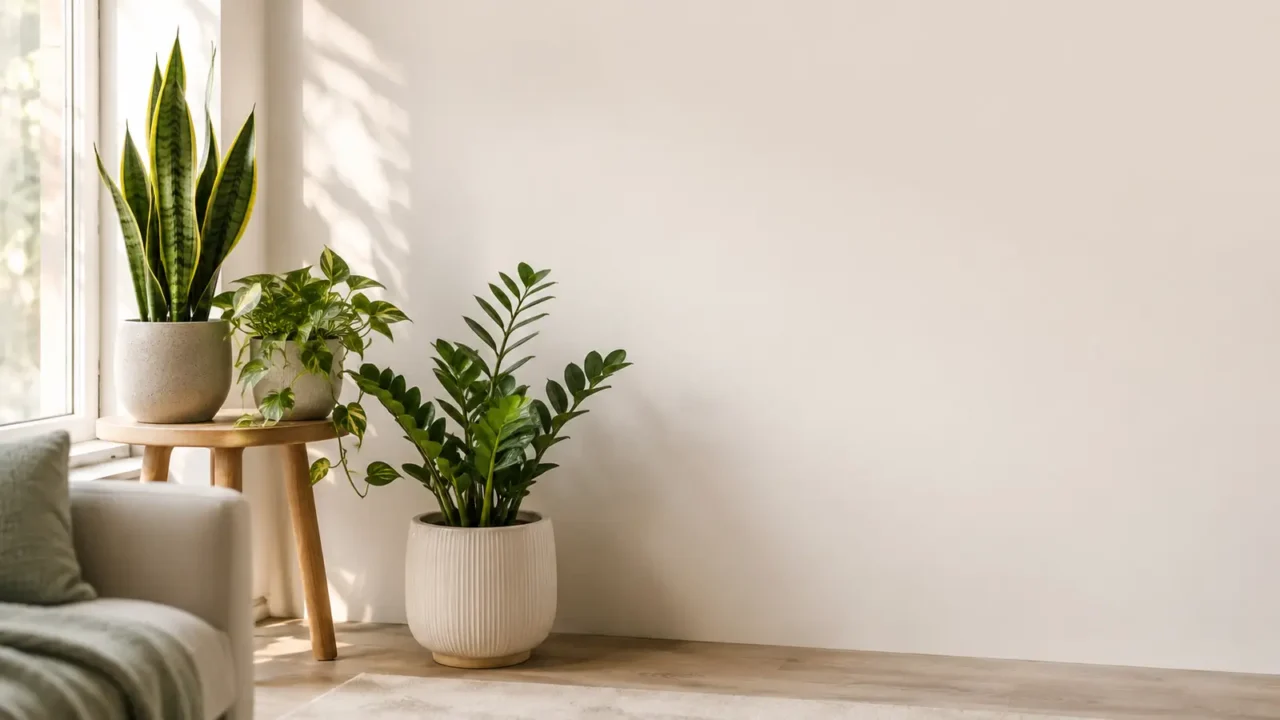
If you have ever searched for low light plants for apartments, you probably want one simple thing: beautiful indoor plants that can handle a small home without perfect sunlight.
Maybe your apartment has only one good window. Maybe your living room looks bright to you, but your plants still turn yellow, stretch toward the window, or stop growing. Or maybe you bought a “low-light plant,” placed it in a stylish dark corner, watered it every few days, and still watched it slowly decline.
You are not bad at plants. You may just need the right plants for your actual home.
In this beginner-friendly guide from NeatNookLiving, you will learn five of the best low-light-tolerant apartment plants, how to care for them, which mistakes to avoid, and which simple tools can help you keep your plants alive without stress.
What “Low Light” Really Means for Apartment Plants
Before choosing plants, it is important to understand one honest rule:
Low light does not mean no light.
Plants still need usable light to grow. Low-light plants are usually plants that tolerate shaded rooms, indirect daylight, north-facing windows, or places a few feet away from a brighter window.
TheUniversity of Minnesota Extension explains that plants in low-light environments grow more slowly and use less water, so overwatering becomes easier in darker spaces. (University of Minnesota Extension)
A simple beginner test:
If you can comfortably read a book in the room during the day without turning on a lamp, some low-light-tolerant plants may work there. If the room is dark all day or has no windows, consider using a small LED grow light.
Good apartment spots for low-light plants include:
- Near a north-facing window
- A few feet from an east-facing window
- A bright shelf with indirect daylight
- A bedroom or office with consistent daytime light
- A darker corner supported by a small grow light
For more help understanding apartment lighting, read: The Simple Indoor Plant Light Test Before You Buy a Plant
Best Low Light Plants for Apartments
1. Snake Plant
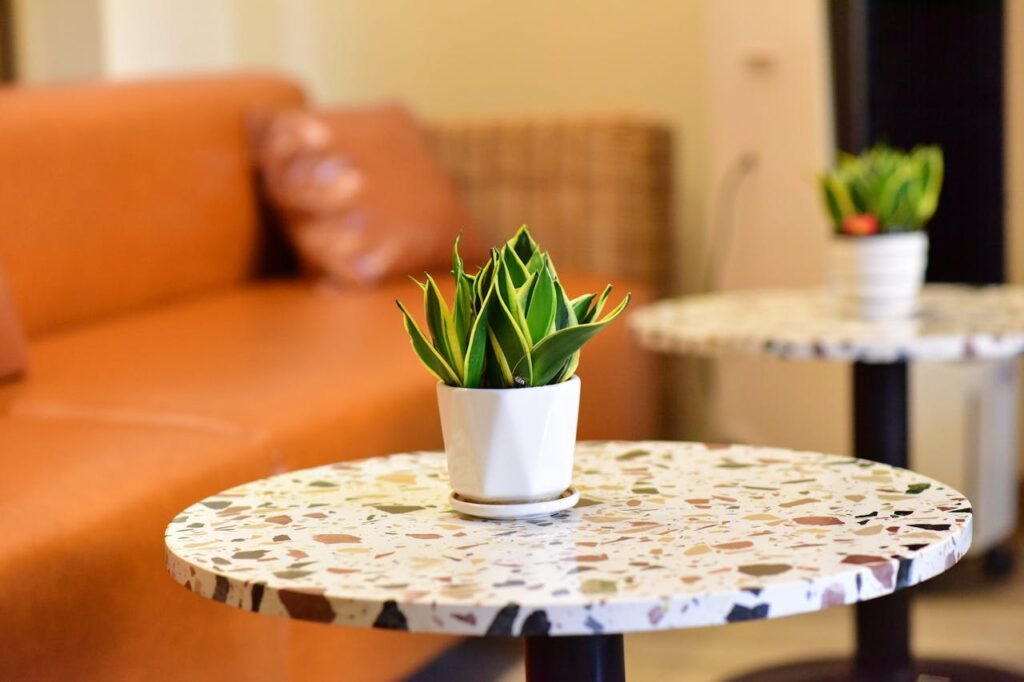
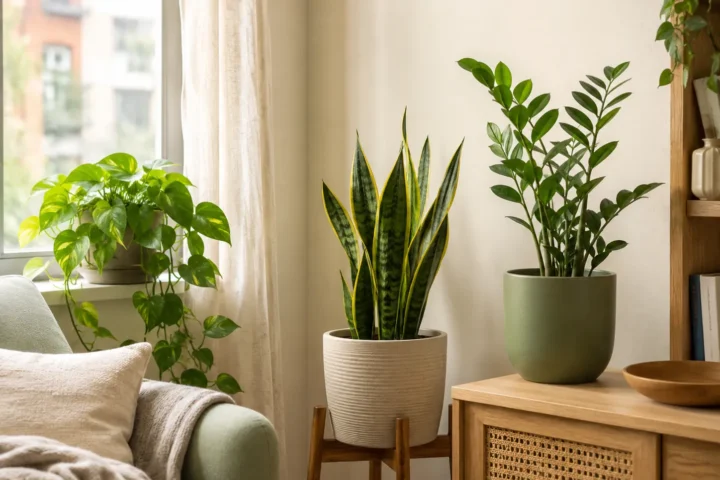
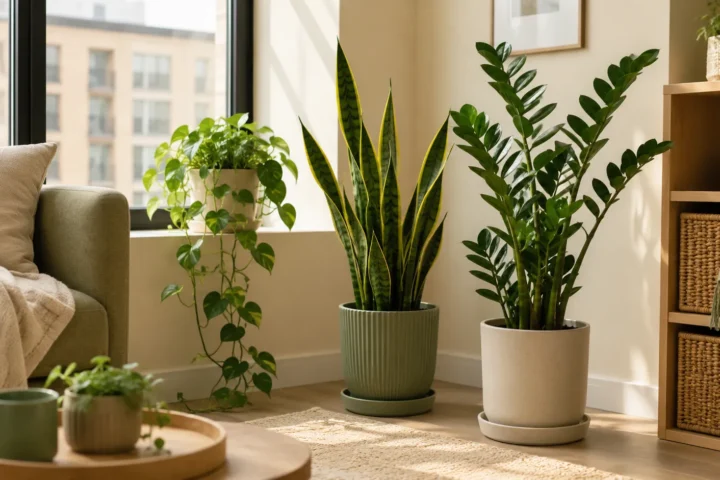
The snake plant is one of the most beginner-friendly indoor plants for apartments. It has upright leaves, takes up very little floor space, and looks clean in bedrooms, entryways, living rooms, and small corners.
TheUniversity of Maryland Extension describes snake plants as very long-lived and tolerant of low light, while theRHS says sansevierias are robust, undemanding plants that grow in both bright and low light. (University of Maryland Extension)
Why beginners like it
Snake plants are forgiving. They do not need frequent watering and can handle occasional neglect better than many leafy houseplants.
Simple care tips
Place your snake plant in low to bright indirect light. Let the soil dry out well before watering. Use a pot with drainage holes, and never let the plant sit in standing water.
Common mistake
The biggest mistake is watering too often. In a darker room, a snake plant may need water much less often than you expect.
Best for
Small apartments, bedrooms, minimalist decor, narrow corners, and beginners who forget to water.
Pet note: Snake plants are listed by theASPCA as toxic to cats and dogs, so keep them away from pets that chew plants. (ASPCA)
2. ZZ Plant
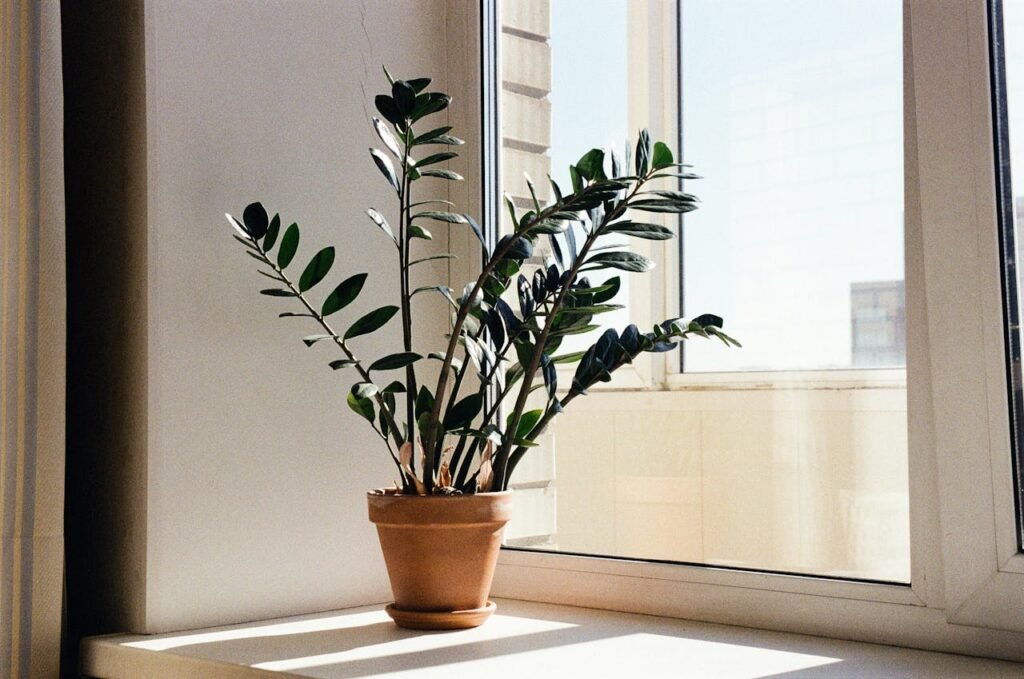
The ZZ plant is one of the best low-maintenance houseplants for beginners. It has glossy green leaves, a clean modern shape, and a polished look that fits beautifully into cozy apartment decor.
TheMissouri Botanical Garden notes that ZZ plants perform well in shaded conditions and bright indirect light, but they should be allowed to dry between watering. (Missouri Botanical Garden)
Why beginners like it
ZZ plants store water in thick underground rhizomes, so they can handle dry periods better than many common houseplants.
Simple care tips
Place it in low to medium indirect light. Water only when the soil has dried well. Avoid wet soil, especially in winter or darker rooms.
Common mistake
Overwatering. A ZZ plant in low light uses water slowly, so watering too often can cause root problems.
Best for
Bedrooms, offices, shaded living rooms, renters, and beginners who want a low-care plant with a premium look.
3. Pothos
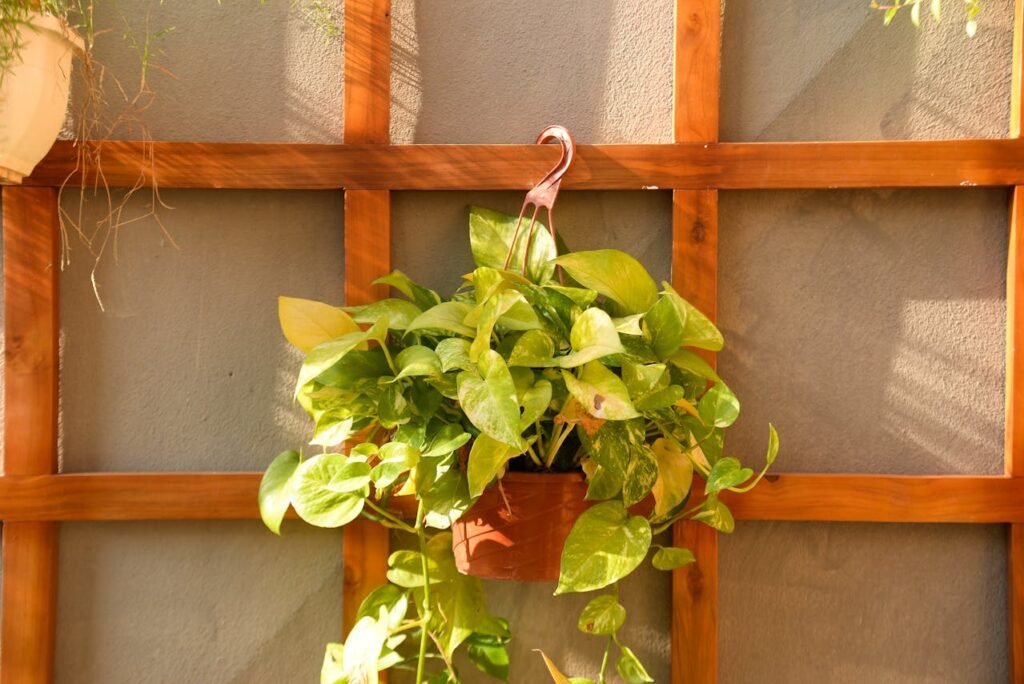
Pothos is one of the easiest indoor plants for beginners and one of the best choices for small apartments. It grows in trailing vines, so you can style it on shelves, bookcases, hanging planters, or wall hooks.
North Carolina State Extension says pothos prefers bright indirect light but can survive for long periods in low light.Wisconsin Horticulture also describes pothos as very easy to grow and a strong choice for beginner houseplant owners. (Plant Toolbox)
Why beginners like it
Pothos gives visible growth faster than many low-light plants. It can make a plain shelf or apartment corner feel greener without taking up much floor space.
Simple care tips
Place pothos in low to bright indirect light. Water when the top part of the soil feels dry. Trim long vines to keep the plant fuller. Rotate the pot every week or two so the plant grows evenly.
Common mistake
Putting a highly variegated pothos in a room that is too dark. It may survive, but the leaves may lose some color and growth may slow.
Best for
Shelves, hanging baskets, small apartments, cozy corners, and beginners who want visible growth.
Pet note: Golden pothos is listed by theASPCA as toxic to dogs and cats. (ASPCA)
Want help with watering? Read:How Often Should You Water Indoor Plants?
4. Chinese Evergreen
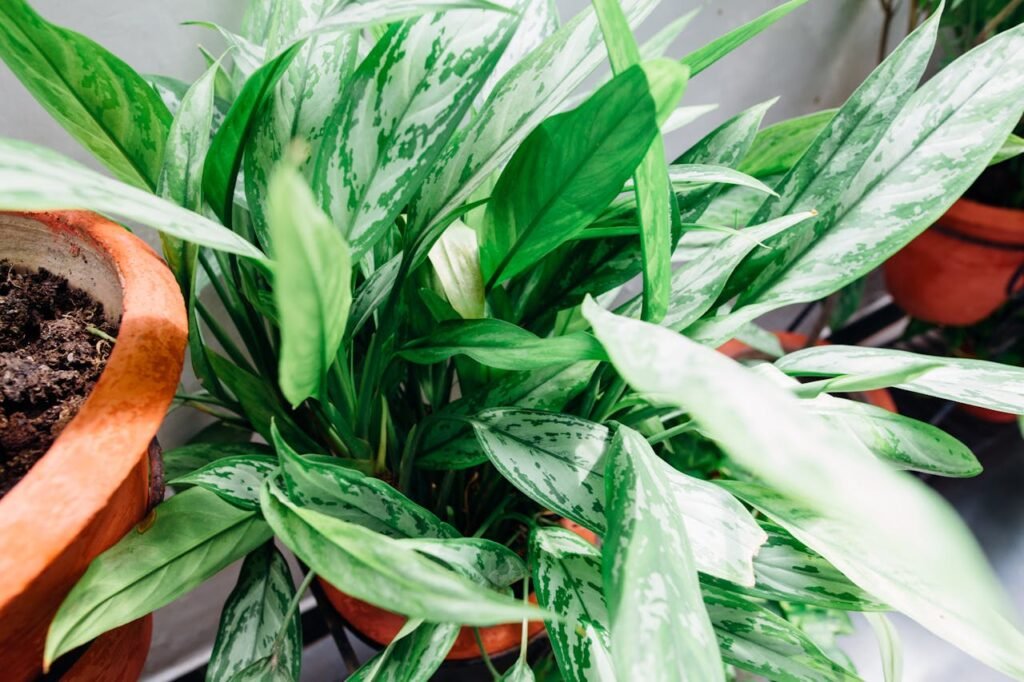
Chinese evergreen, also called Aglaonema, is a beautiful foliage plant with patterned leaves. Some varieties have green, silver, cream, pink, or red tones.
For darker apartments, green or silver-green varieties are usually easier than very colorful varieties.
TheMissouri Botanical Garden says Chinese evergreen prefers diffused sun or good indirect light, avoids direct sun, and tolerates somewhat shady locations. (Missouri Botanical Garden)
Why beginners like it
Chinese evergreen looks decorative but is still fairly forgiving when placed in the right indoor spot.
Simple care tips
Place it in indirect light. Avoid harsh direct sun. Keep the soil lightly moist during active growth, but do not let it stay soggy. Reduce watering when growth slows in cooler or darker seasons.
Common mistake
Buying a very colorful variety for a dark corner. More colorful leaves often need better light to maintain strong color.
Best for
Side tables, plant stands, bedrooms, low-light living rooms, and beginners who want a softer leafy plant.
5. Cast Iron Plant
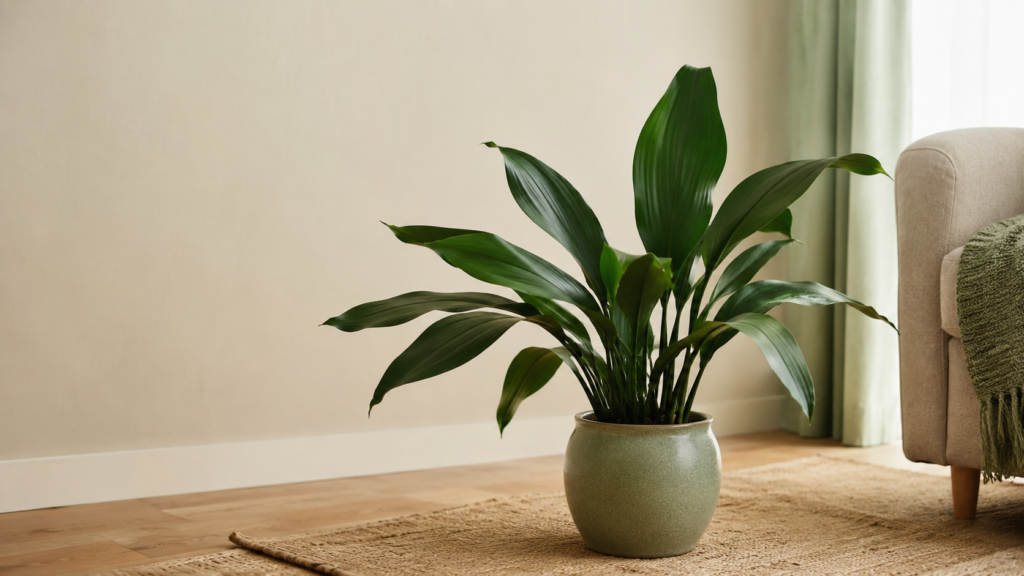
The cast iron plant is not always as trendy as pothos or snake plant, but it is one of the toughest plants for lower-light homes. It has deep green leaves and a calm, classic look.
North Carolina State Extension says cast iron plants prefer partial to full shade and are intolerant of direct sun. (Plant Toolbox)
Why beginners like it
It is slow-growing but dependable. This is a good plant for people who want something steady and low-maintenance.
Simple care tips
Place it in low to medium indirect light. Avoid direct sun. Water when the soil has partly dried. Wipe the leaves occasionally so dust does not block light.
Common mistake
Expecting fast growth. Cast iron plants grow slowly, especially in lower light, so do not panic if it does not produce new leaves quickly.
Best for
Darker corners, traditional decor, calm bedrooms, shaded rooms, and beginners who prefer simple care.
Simple Low-Light Plant Care Routine for Beginners
Step 1: Choose the brightest low-light spot
Start with your best available spot, not the darkest corner. Low-light-tolerant plants usually look better and stay healthier when they receive some indirect daylight.
Step 2: Use a pot with drainage
A beautiful decorative pot is fine, but the plant itself should sit in a nursery pot or container with drainage holes. This helps prevent soggy soil.
Beginner tip: Keep the plant in its plastic nursery pot and place that inside a decorative outer pot. When watering, remove the nursery pot, water thoroughly, let it drain, then place it back.
Step 3: Check soil before watering
Do not water only because it is Sunday. In low light, plants use water more slowly. Feel the soil first. If it is still moist, wait.
Step 4: Rotate your plant
Rotate the pot every week or two so the plant does not lean heavily toward the window.
Step 5: Watch for patterns
One yellow leaf is not always a disaster. But several yellow leaves, wet soil, and slow decline may mean the plant is getting too much water, too little light, or poor drainage.
For more troubleshooting, read: Yellow Leaves on Indoor Plants: What Beginners Usually Get Wrong
Common Beginner Mistakes With Low-Light Plants
Mistake 1: Thinking low light means no light
A windowless room is difficult for most plants unless you use a grow light.
Mistake 2: Watering too often
Lower light usually means slower growth and slower water use. This is why overwatering is so common in apartments.
Mistake 3: Buying plants only for looks
A plant may match your decor but still hate the corner you place it in. Choose based on light, space, and care level first.
Mistake 4: Using pots without drainage
A pretty pot with no drainage can trap water around the roots. Use a drainage pot or the nursery-pot-inside-decorative-pot method.
Mistake 5: Expecting fast growth in low light
Low-light plants often grow slowly. Slow growth is normal, especially in winter or darker rooms.
Beginner-Friendly Product and Tool Recommendations
You do not need a huge plant-care setup to start. A few simple tools can make indoor plant care easier.
Recommended beginner tools:
- Small watering can with narrow spout
- Plant pots with drainage holes
- Saucers or drip trays
- Simple moisture meter
- Small LED grow light
- Plant care tracker
You do not need to buy everything at once. Start with one beginner-friendly plant, one pot with drainage, and a simple weekly plant check routine.
For a full beginner setup, visit: Beginner plant tools, sorted by what to buy first
Download the Free Apartment Plant Quick-Start Guide
Want a simple printable checklist for choosing, placing, and watering your first apartment plants?
Download the free Apartment Plant Quick-Start Guide here:
Download the Free Apartment Plant Quick-Start Guide
It is made for renters, small apartments, low-light rooms, and people who want indoor plants to feel simple instead of stressful.
When you are ready for a deeper step-by-step system, you can also explore:
The Apartment Plant Starter System
Conclusion
The best low light plants for apartments are not magic plants that grow in total darkness. They are forgiving plants that can tolerate lower-light homes when you place them wisely, water carefully, and avoid common beginner mistakes.
Start with one or two reliable plants like snake plant, ZZ plant, pothos, Chinese evergreen, or cast iron plant. Give them indirect light, use drainage, check the soil before watering, and observe how they respond in your home.
A beautiful apartment plant setup does not need to start with a jungle. It can start with one healthy plant in the right spot.
FAQ
What is the best low light plant for apartments?
The ZZ plant and snake plant are two of the easiest choices for beginners because they tolerate lower light and do not need frequent watering. Pothos is also a great option if you want a trailing plant.
Can low-light plants survive in a room with no windows?
Most plants will struggle in a room with no windows. A low-light plant may survive for a while under strong artificial room lighting, but a small LED grow light is better for long-term health.
How often should I water low-light apartment plants?
It depends on the plant, pot size, soil, season, and room conditions. In general, low-light plants use water more slowly, so always check the soil before watering.
Why are my low-light plant leaves turning yellow?
Yellow leaves can happen from overwatering, poor drainage, low light, old leaves, stress, or sudden environmental changes. If the soil is wet and several leaves are yellowing, overwatering is a likely cause.
Are low-light plants safe for pets?
Some common low-light plants are not pet-safe. Snake plant and golden pothos are listed by ASPCA as toxic to dogs and cats, so always check plant safety before buying if you have pets. (ASPCA)
New to apartment plants?
Download the free Apartment Plant Quick-Start Guide — five forgiving low-light plants, the one watering rule, and a 10-minute weekly routine.
Download the Free Guide