The Simple Indoor Plant Light Test Before You Buy a Plant
Do Not Buy the Plant Before You Check the Light
Have you ever bought a beautiful indoor plant, placed it in a cute corner, and then watched it slowly struggle?
Maybe the leaves turned yellow.
Maybe the plant leaned toward the window.
Maybe it stopped growing.
Maybe you thought, “I am just bad with plants.”
Most of the time, the problem is not you.
The problem is often light.
Many beginners buy plants based on looks first. Then they try to make the plant fit their room. A better way is to check your room first, then choose a plant that can live there.
This simple indoor plant light test will help you do that.
You do not need fancy tools. You do not need to be a plant expert. You only need a few minutes, your eyes, your hand, and a little attention.
By the end, you will know how to check plant light, understand indirect light for plants, and choose better plant spots in your apartment.
Quick Answer
The easiest indoor plant light test is this:
Stand in the exact place where you want to keep your plant during the brightest part of the day. Try these three checks:
- Can you read a book or newspaper there without turning on a light?
If yes, the spot may have usable low light. - Does your hand make a clear shadow, soft shadow, or almost no shadow?
A clear shadow usually means brighter light. A soft shadow often means indirect light. Almost no shadow means very low light. - Is the plant spot near a window, or far inside the room?
Light gets weaker as you move away from a window, even if the room still looks bright to your eyes.
Low-light plants can tolerate lower light, but they still need some usable light. “Low light” does not mean “no light.” The University of Minnesota Extension describes low light as a place bright enough to read a newspaper, and notes that many low-light plants are foliage plants rather than flowering plants. (University of Minnesota Extension)
Why This Matters
Plants need light to make energy. Without enough light, a plant may survive for a while, but it may not grow well.
Light affects:
- How fast the plant grows
- How often the plant needs water
- How strong the stems become
- How healthy the leaves look
- Whether the plant becomes leggy or weak
This is why plant placement matters so much.
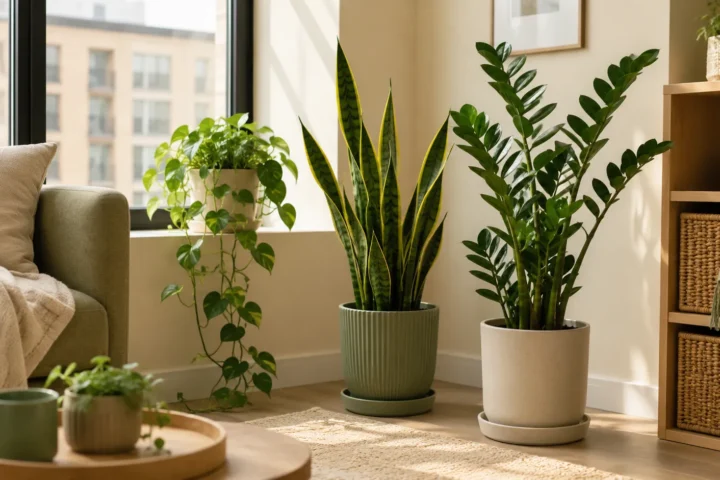
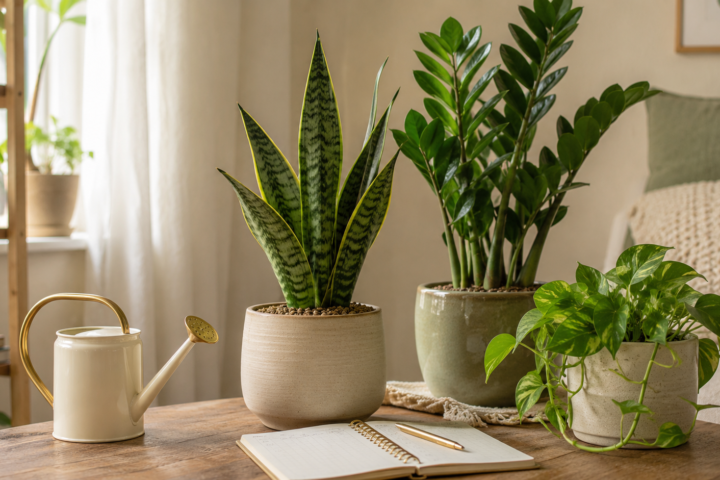
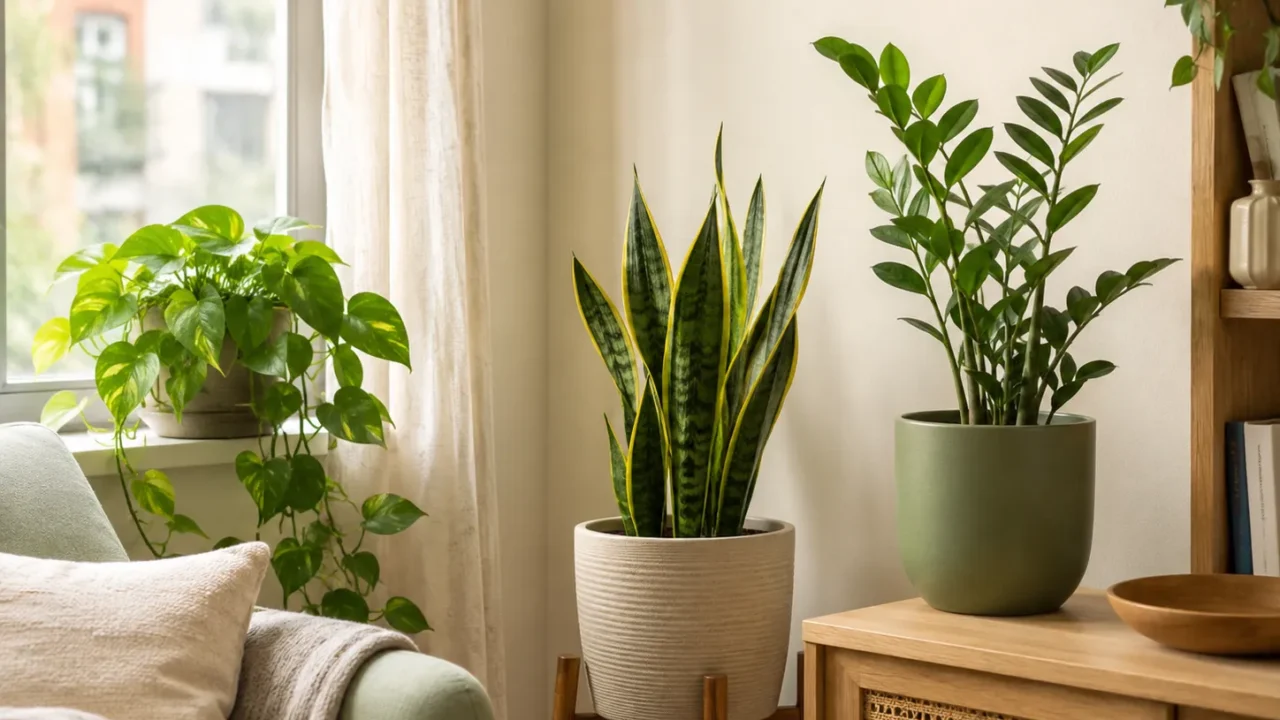
A snake plant, pothos, ZZ plant, or Chinese evergreen may handle lower light better than many other plants. But even these plants need some light. A fully dark hallway, windowless bathroom, or closed room is not a good long-term plant home unless you add a grow light.
The Royal Horticultural Society also notes that light changes during the day and across seasons. A spot that feels safe in winter may become too sunny in summer, and a summer-bright spot may become dim in winter. (RHS)
So before you buy a plant, test the light.
This one small step can save money, reduce stress, and help you avoid buying the wrong plant for your home.
Common Beginner Mistakes
1. Thinking “Low Light” Means “No Light”
This is one of the biggest beginner mistakes.
Low light means the plant gets weak but usable light. It does not mean complete darkness.
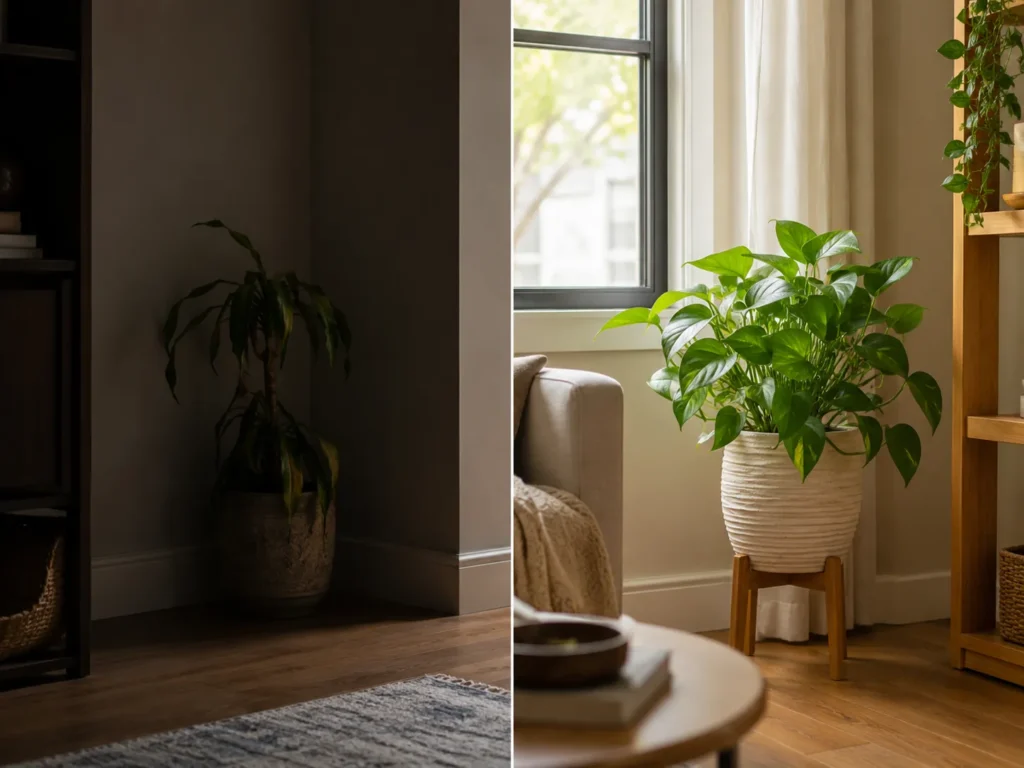
A corner with no window nearby may look cozy for photos, but it may not be enough for a real plant. If you cannot comfortably read there during the day, the spot may be too dark.
For a low light room test, ask yourself:
“Can I sit here and read without switching on a lamp?”
If the answer is no, the plant may need a brighter place or a grow light.
2. Placing Plants Based Only on Decor
A plant may look perfect beside your sofa, bed, desk, or TV stand.
But the plant does not care about the decor first. It cares about light, water, air, pot drainage, and temperature.
Good design matters. But healthy plant placement comes first.
A better method is:
Choose the plant spot first.
Check the light.
Then choose a plant that fits that light.
This is one of the simplest plant placement tips for beginners.
3. Putting Bright-Light Plants in Dark Corners
Some plants need bright light to stay healthy. Many succulents, cacti, herbs, and flowering plants usually need stronger light than a dark apartment corner can provide.
If you place a high-light plant in a low-light room, it may stretch, lean, drop leaves, or grow very slowly.
The University of Florida IFAS explains that plants needing direct light usually need several hours of direct sun exposure, often near bright south or southwest windows. (gardeningsolutions.ifas.ufl.edu)
So before buying sun-loving plants, check if your home can actually give them enough light.
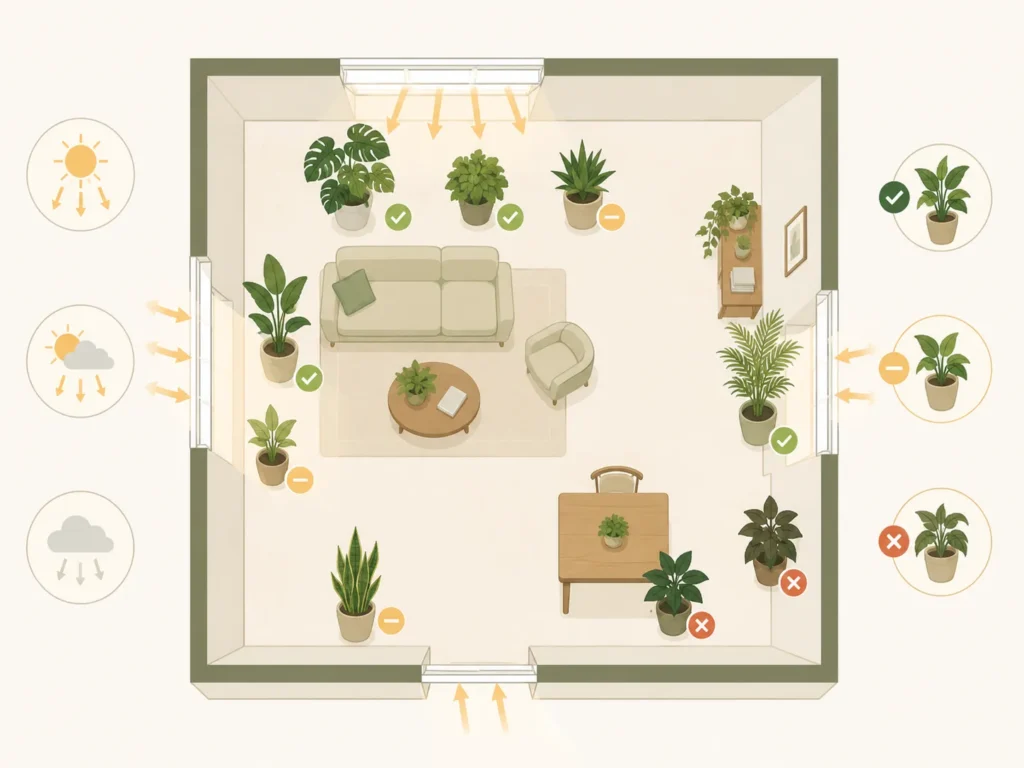
4. Ignoring Window Direction
Window direction can change the type of light your room gets.
In many Northern Hemisphere homes:
- North-facing windows often give lower light.
- East-facing windows often give gentle morning light.
- West-facing windows can give stronger afternoon light.
- South-facing windows often give the brightest light.
This is a general guide. Buildings, trees, curtains, balconies, and weather can change the real light level.
That is why you should test the exact plant spot, not just the window direction.
5. Forgetting That Light Changes by Season
A plant spot can be bright in one season and darker in another.
In winter, days are shorter. The sun may be weaker. In summer, the sun may be stronger and hotter.
This means your plant may need a small move during the year.
Do a quick light check every few months, especially if your plant starts leaning, stretching, or losing color.
Indoor Plant Light Test: Step-by-Step Tips
Step 1: Choose the Exact Plant Spot
Do not test the whole room.
Test the exact place where the plant will sit.
For example:
- On the shelf
- Beside the sofa
- Near the bed
- On the desk
- In the kitchen corner
- On the windowsill
- On the floor near the window
Light can change a lot within the same room. A spot beside the window can be much brighter than a spot 8 feet away.
So stand where the plant will actually live.
Step 2: Test During the Brightest Part of the Day
Do this test when your room is naturally bright.
For many homes, this is late morning to early afternoon. But it depends on your window direction.
Do not test at night.
Do not test with only room lights on.
Do not test during a stormy dark day if possible.
You want to know what natural light your plant will get on a normal bright day.
Step 3: Try the Reading Test
This is the easiest beginner test.
Hold a book, paper, or phone screen with normal brightness in the plant spot.
Ask:
“Can I read this easily without turning on a lamp?”
If yes, the spot may have usable light for low-light-tolerant plants.
If no, the spot is probably too dark for most plants without help.
This is not a perfect scientific test. But it is a very useful beginner check.
The University of Minnesota Extension uses a similar idea when describing low light as bright enough to read a newspaper. (University of Minnesota Extension)
Step 4: Try the Hand Shadow Test
Now place your hand between the window and the plant spot.
Look at the shadow on the wall, floor, or table.
Clear, sharp shadow
This usually means bright light. Some plants may like this, but direct sun can burn sensitive leaves.
Soft, blurry shadow
This often means bright indirect light or medium indirect light. Many common houseplants like this type of light.
Very weak shadow or no shadow
This usually means low light or very low light. Only low-light-tolerant plants may handle this, and growth may be slower.
This hand test is simple, but helpful. It teaches your eyes to notice light better.
Step 5: Check for Direct Sun
Direct sun means the sun rays hit the plant leaves directly.
Indirect light means the room is bright, but the sun rays do not sit directly on the leaves.
Many indoor foliage plants enjoy indirect light for plants. They may like a bright room near a window, but not harsh afternoon sun on their leaves.
Direct sun can be useful for some plants. But it can also scorch sensitive houseplants, especially in hot windows.
The RHS notes that direct sun in summer can cause leaf discoloration and scorching for some houseplants unless the light is filtered. (RHS)
A simple way to soften direct sun is to use:
- Sheer curtains
- Blinds
- A spot beside the window instead of directly in the sun
- A plant stand slightly away from the glass
Step 6: Notice What Is Blocking the Light
Sometimes a room has a window but still gets poor light.
Check for light blockers like:
- Tall buildings
- Covered balconies
- Big trees
- Heavy curtains
- Tinted glass
- Deep window frames
- Furniture in front of the window
A window does not always mean bright plant light.
This is why the test should happen at the real plant spot.
Step 7: Match the Plant to the Light
Once you know your light level, choose a plant that fits.
Very low light
Best choice: avoid buying a plant for this spot unless you add a grow light.
Examples:
- Windowless hallway
- Dark bathroom
- Closed room
- Corner where you cannot read without a lamp
Low light
Possible plant types:
- ZZ plant
- Snake plant
- Cast iron plant
- Some pothos varieties
- Some Chinese evergreen varieties
These plants may grow slowly in low light. Water carefully because soil dries more slowly in dim areas.
The University of Maryland Extension lists ZZ plant, snake plant, cast iron plant, and peace lily as examples for low-light indoor conditions. (University of Maryland Extension)
Medium indirect light
Possible plant types:
- Pothos
- Philodendron
- Dracaena
- Chinese evergreen
- Peperomia
- Peace lily
This is a friendly range for many beginner houseplants.
Bright indirect light
Possible plant types:
- Monstera
- Rubber plant
- Hoya
- Some palms
- Fiddle leaf fig, if the care is right
- Many trailing plants
Bright indirect light is often one of the best indoor light types for common houseplants.
Direct light
Possible plant types:
- Cacti
- Many succulents
- Some herbs
- Jade plant
- Some hoya varieties
Direct-light plants need stronger light. A dark shelf is not the right place for them.
Helpful Tools or Products
You do not need to buy anything to start. The reading test and hand shadow test are enough for most beginners.
But these tools can help if you want more confidence.
1. Light meter app
A phone light meter app can give a rough idea of brightness. It may not be perfect, but it can help you compare one spot with another.
Use it like this:
- Check the window area.
- Check the shelf.
- Check the dark corner.
- Compare the numbers.
The exact number may not be perfect, but the difference between spots can be useful.
2. Small digital light meter
A digital light meter can be more useful if you have many plants or a dark apartment.
It can help you understand which spots are truly low, medium, or bright.
University extensions often describe indoor plant light using foot-candles. For example, University of Maryland Extension lists low light as about 25–100 foot-candles and medium-bright light as about 100–500 foot-candles. (University of Maryland Extension)
You do not need to memorize these numbers. Just use them as a guide.
3. Sheer curtains
Sheer curtains can soften strong direct sun.
They are helpful if your window gets harsh afternoon sunlight but you still want bright light for plants.
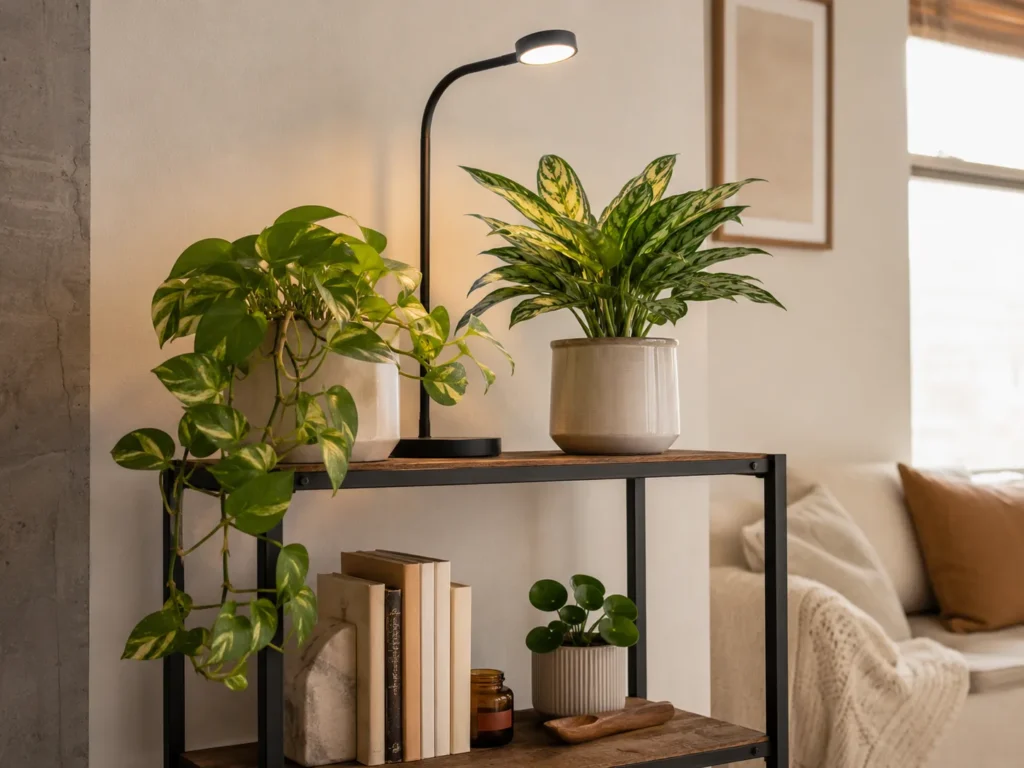
4. Grow light
A grow light can help if your room is too dark.
This may be useful for:
- Windowless rooms
- Dark corners
- Winter months
- Plant shelves far from windows
Choose a simple grow light from a trusted brand. Check the product details carefully. Do not buy based only on hype.
Ethical affiliate note
Some articles on NeatNookLiving may include affiliate links. This means we may earn a small commission if you buy through a link, at no extra cost to you. We only suggest products that match the topic and may be useful for beginners. No product can replace proper plant care, light, watering, and patience.
Simple Checklist
Use this checklist before buying a new plant.
Indoor Plant Light Test Checklist
- I chose the exact place where the plant will sit.
- I checked the spot during a bright part of the day.
- I can read there without turning on a lamp.
- I tried the hand shadow test.
- I checked if the light is direct or indirect.
- I noticed buildings, trees, curtains, or balconies blocking light.
- I checked how far the spot is from the window.
- I matched the plant to the light level.
- I avoided buying a bright-light plant for a dark corner.
- I know that low light does not mean no light.
- I will water less often if the plant is in lower light.
- I will move the plant if it starts leaning, stretching, or fading.
Conclusion
The indoor plant light test is one of the easiest things you can do before buying a plant.
It helps you avoid guessing.
It helps you choose better plants.
It helps you save money.
And it gives your plant a better chance to grow well.
Remember this simple rule:
Do not buy a plant first and hope your room works.
Check your room first. Then buy the right plant.
Use the reading test. Try the hand shadow test. Look for direct or indirect light. Check how far the spot is from the window.
Once you understand your light, indoor plant care becomes much easier.
Want a beginner-friendly shortcut? Download the free Apartment Plant Quick-Start Guide. It will help you choose simple plants that can handle lower-light homes better than many trendy plants.
FAQs
What is the easiest indoor plant light test?
The easiest test is the reading test. Stand where you want to place the plant. If you can read a book or paper there during the day without turning on a lamp, the spot may have usable light for low-light-tolerant plants.
How do I know if my room has indirect light for plants?
Your room may have indirect light if it feels bright during the day, but the sun rays do not hit the plant leaves directly. A soft hand shadow is often a sign of indirect light.
Is low light enough for indoor plants?
Low light can be enough for some plants, but not all plants. ZZ plants, snake plants, cast iron plants, and some pothos varieties can tolerate lower light. But they still need some usable light.
Can plants live in a room with no windows?
Most plants will not do well long-term in a room with no windows unless you use a proper grow light. “Low light” is not the same as “no light.”
How far can indoor plants be from a window?
It depends on the plant, window direction, curtain type, season, and outside shade. In general, light becomes weaker as you move farther from the window. Test the exact spot before placing the plant there.
What is bright indirect light?
Bright indirect light means the area is bright, but the sun does not shine directly on the leaves for long periods. Many common houseplants like bright indirect light.
Why is my plant leaning toward the window?
A plant may lean toward the window because it is trying to reach more light. Try rotating the pot sometimes or moving the plant closer to a brighter indirect light source.
Should I use a grow light for a dark apartment?
A grow light can help if your apartment has very low natural light. It is especially useful for dark shelves, windowless rooms, or winter months.
New to apartment plants?
Download the free Apartment Plant Quick-Start Guide — five forgiving low-light plants, the one watering rule, and a 10-minute weekly routine.
Download the Free Guide