Low Light vs No Light Plants: What Beginners Need to Know
You may have a dark apartment, a small room, or a corner far from the window.
So you search for no light indoor plants and hope to find a plant that can live anywhere.
Here is the honest truth.
Plants can handle different light levels, but they cannot live in total darkness forever. The topic of low light vs no light plants is confusing because many plant labels say “low light,” but beginners often read that as “no light.”
That mistake can lead to yellow leaves, weak growth, wet soil, and dead plants.
The good news is simple.
You do not need a sunny home to enjoy indoor plants. You just need to understand what low light really means and choose plants that tolerate low light.
Quick Answer
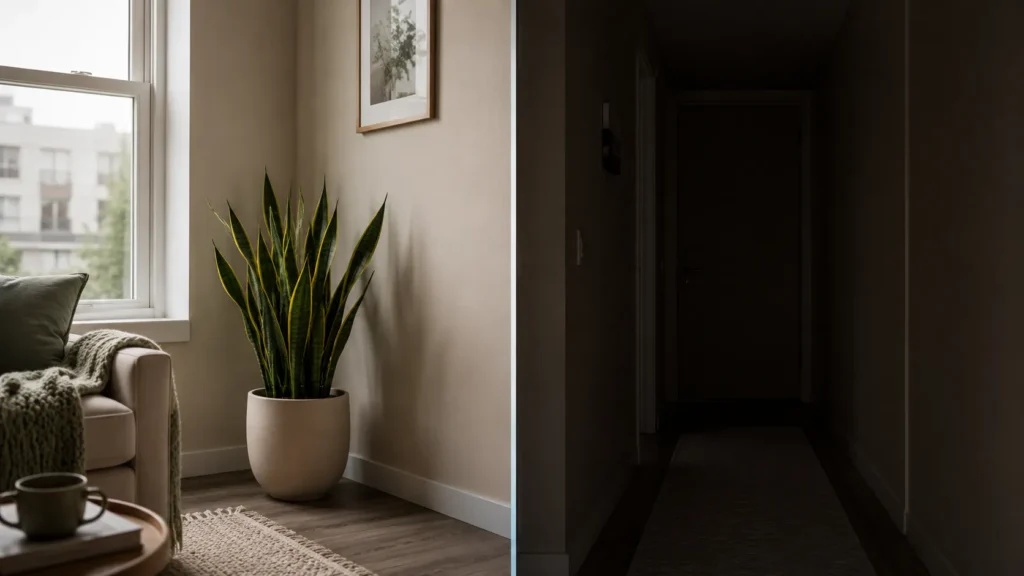
Low light does not mean no light.
Low light means the plant gets some usable light. It may be indirect light, soft window light, or light from a grow light.
No light means there is no real light source. A windowless bathroom, dark hallway, or closed room with no grow light is not a healthy long-term home for a living plant.
Plants need light because light helps them make energy through photosynthesis. The University of Maryland Extension explains that light is one of the most important factors for healthy indoor plant growth.
So, the best answer is:
Choose plants that tolerate low light, not plants that need no light.
Good beginner options include:
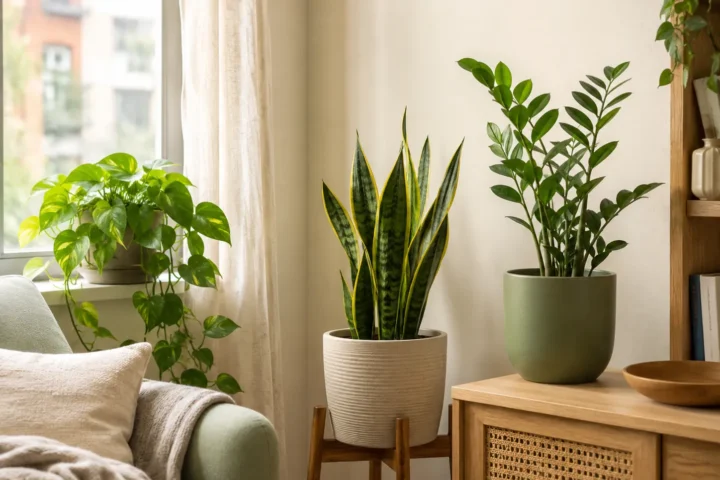
- Snake plant
- ZZ plant
- Pothos
- Cast iron plant
- Chinese evergreen
- Peace lily
- Philodendron
These plants can often handle dimmer rooms better than many other houseplants. But they still need some light.
Why This Matters
Understanding low light vs no light plants can save you money, stress, and plant sadness.
Many beginners kill plants because they place them in a corner that looks nice but gives almost no light.
A plant may look okay for a few weeks. But over time, it may start to struggle.
You may see:
- Yellow leaves
- Slow or stopped growth
- Long, weak stems
- Leaves reaching toward the window
- Wet soil that stays wet for too long
- Root problems from overwatering
Low light also changes how often your plant needs water. The University of Minnesota Extension notes that plants in lower light grow more slowly and use less water, so overwatering becomes easier.
This is why low light plant care is not only about plant choice.
It is also about watering less, checking the soil, and placing the plant in the best available spot.
Common Beginner Mistakes
Mistake 1: Thinking “low light” means “dark room”
A low-light plant can tolerate dimmer conditions, but it still needs some light.
The University of Minnesota describes low light as a place that may be bright enough to read a newspaper, such as a north-facing window or a fairly dark corner.
That is very different from a room with no window and no grow light.
Mistake 2: Buying plants only because they look pretty
Some plants look beautiful online but need bright indirect light.
If your apartment is dark, choose plants based on your home first.
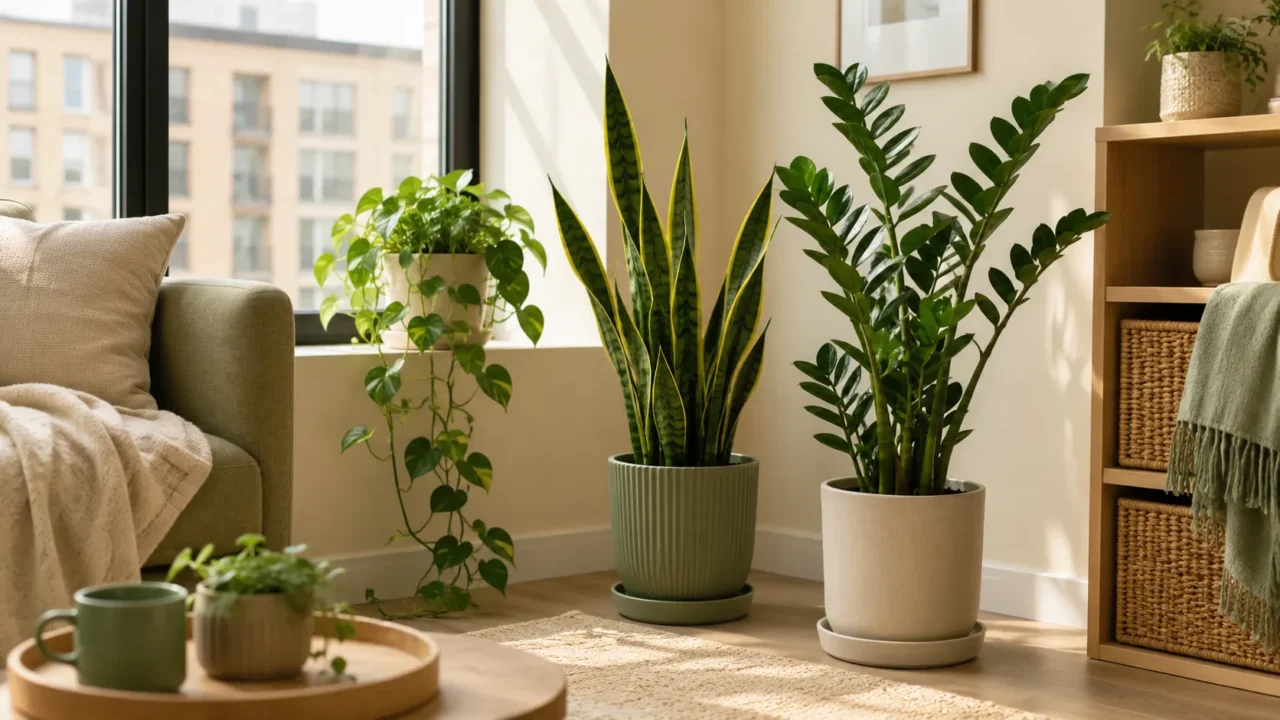
For dark apartment plants, start with forgiving foliage plants like snake plant, ZZ plant, pothos, or Chinese evergreen.
Mistake 3: Watering on a fixed schedule
Low light plants often need less water.
If you water every Sunday without checking the soil, the pot may stay too wet.
Too much water is one of the biggest beginner problems.
Instead, check the soil first.
Mistake 4: Placing plants in windowless spaces forever
A windowless bathroom or hallway may look cozy, but it is not ideal for a real plant unless you add a grow light.
You can use a fake plant in a fully dark spot. That is better than forcing a living plant to struggle.
Mistake 5: Expecting fast growth in low light
Low light plants can survive in dim spaces, but they may grow slowly.
That is normal.
Do not panic if your plant is not pushing out new leaves every week.
Step-by-Step Tips
Low Light vs No Light Plants: How to Choose the Right Spot
Start by looking at your room during the day.
Ask yourself:
Can I read a book near this spot without turning on a lamp?
If yes, it may be low light.
If no, it may be too dark for most living plants.
Step 1: Find the best natural light
Look for these places first:
- Near a north-facing window
- A few feet away from an east-facing window
- A bright room corner with indirect light
- A shelf that still gets daytime brightness
- A desk near a window
Avoid placing plants deep inside dark rooms unless you use a grow light.
Step 2: Pick the right plant
For beginners, choose strong and forgiving plants.
Good plants that tolerate low light include:
Snake plant
Great for beginners. It can handle low light better than many plants. Let the soil dry before watering.
ZZ plant
Very forgiving. It stores water in thick underground rhizomes, so it does not need frequent watering.
Pothos
Easy and fast-growing in brighter light. It can tolerate lower light, but variegated types may lose some color in dim rooms.
Chinese evergreen
A good choice for low to medium light. Keep it away from cold drafts.
Cast iron plant
Slow-growing but tough. Good for low-light homes.
Peace lily
Can handle lower light, but it usually blooms better with brighter indirect light.
Philodendron
Many types are beginner-friendly and can handle lower indoor light.
Step 3: Water less in low light
Low light means slower growth.
Slower growth means the plant uses less water.
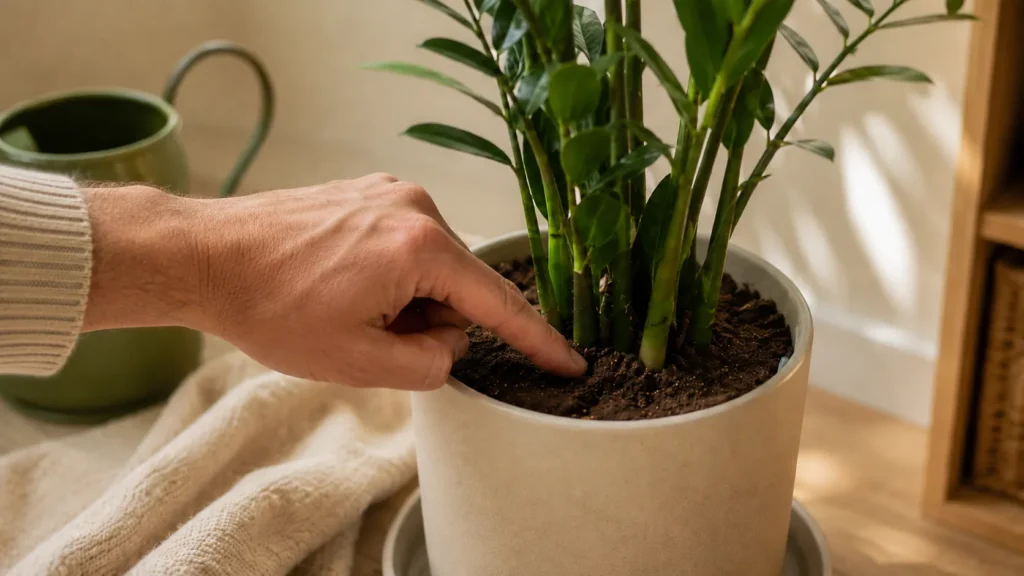
Before watering, touch the soil.
For many beginner plants, wait until the top part of the soil feels dry. For snake plant and ZZ plant, you can usually let the soil dry more deeply before watering.
Step 4: Rotate the plant
Plants often lean toward light.
Turn the pot every week or two so the plant grows more evenly.
This is simple, but it helps.
Step 5: Use a grow light if needed
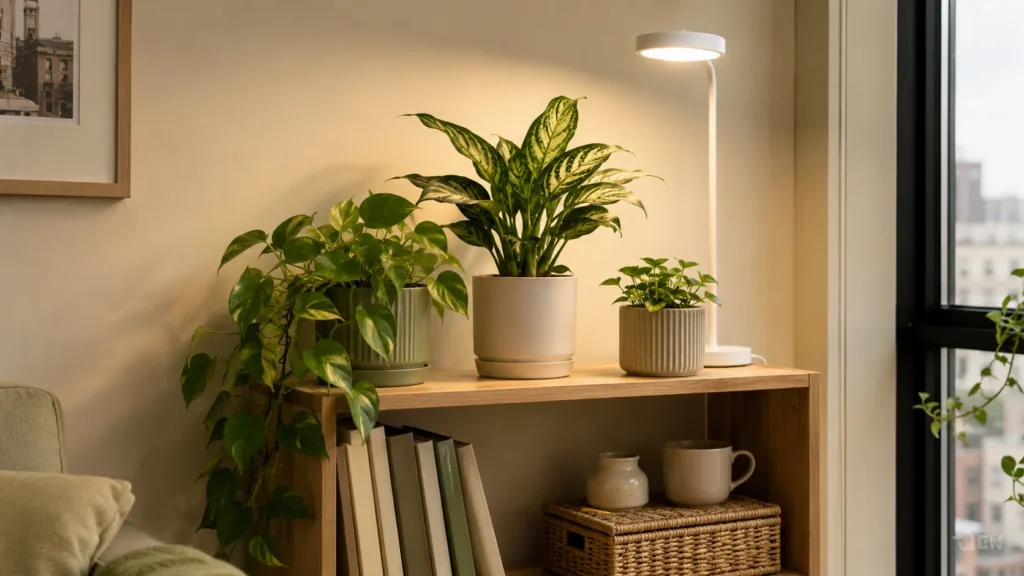
If your room has almost no natural light, use a small LED grow light.
A grow light can help dark apartment plants get usable light.
You do not need a large setup. A simple grow bulb or small clip-on grow light can help a plant corner, shelf, or desk.
Step 6: Watch the leaves
Your plant will show you if it is unhappy.
Signs of too little light may include:
- Long, stretched stems
- Smaller new leaves
- Very slow growth
- Yellowing leaves
- Plant leaning hard toward the window
- Soil staying wet for many days
If this happens, move the plant closer to light or add a grow light.
Helpful Tools or Products
You do not need expensive tools to care for low-light plants.
Start simple.
1. Small LED grow light
Helpful for windowless corners, dark shelves, or winter months.
Choose one only if your home does not have enough natural light.
2. Pot with drainage holes
This is very important.
Low light plants are easy to overwater. A drainage hole helps extra water leave the pot.
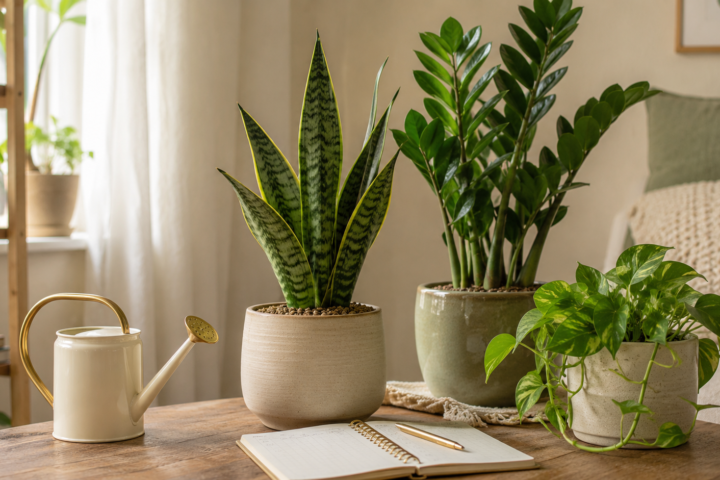
3. Simple watering can
A small watering can helps you water slowly and neatly.
4. Soil moisture meter
This can help beginners, but do not rely on it alone.
Also check the soil with your finger.
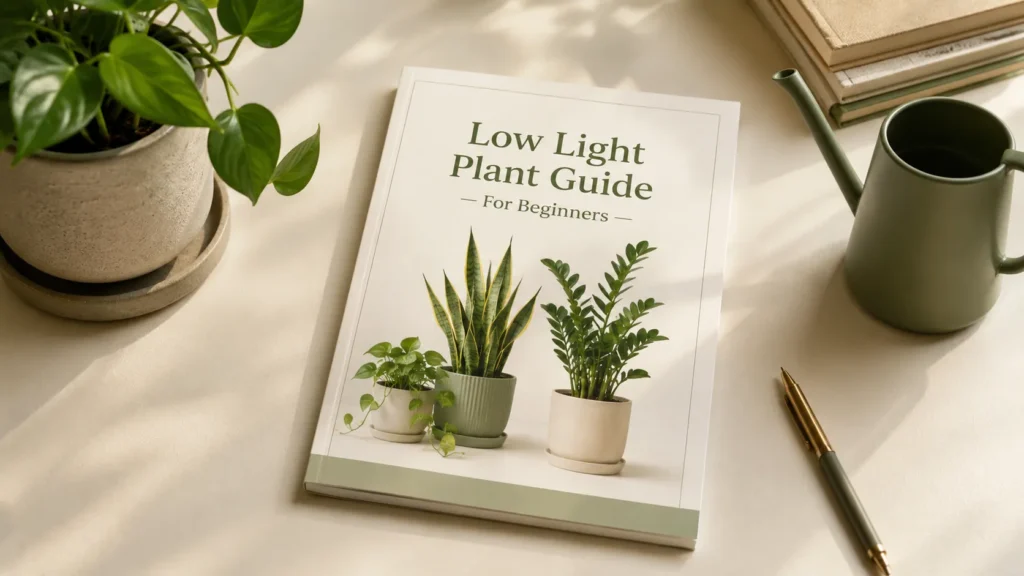
5. The free Apartment Plant Quick-Start Guide
Download the free Apartment Plant Quick-Start Guide
Not sure which plant to choose first? Grab the free NeatNookLiving low-light plant guide and start with simple, beginner-friendly options.
Download the free Apartment Plant Quick-Start Guide
Simple Checklist
Use this quick checklist before buying a plant for a dark room.
- Does the room get any daytime natural light?
- Can you read near the plant spot without a lamp?
- Is the plant known to tolerate low light?
- Does the pot have drainage holes?
- Can you reach the plant easily for watering?
- Will you check the soil before watering?
- Is the plant safe for your pets or children?
- Do you need a grow light for that spot?
- Are you okay with slower growth?
- Have you avoided placing it in total darkness?
Conclusion
The main lesson is simple.
Low light vs no light plants are not the same thing.
Low light plants can live with less light than many other houseplants. But no living plant can stay healthy in full darkness forever.
If your apartment is dim, do not feel discouraged.
Start with plants that tolerate low light, such as snake plant, ZZ plant, pothos, Chinese evergreen, cast iron plant, or peace lily. Place them in the brightest spot you have. Water less often. Check the soil first. Add a grow light if the room is too dark.
You can still build a cozy plant home, even without huge sunny windows.
Start small. Choose the right plant. Learn from the leaves.
And if you want an easier starting point, download the free Apartment Plant Quick-Start Guide.
FAQs
Can plants live with no light?
No, not long term. Living plants need light to make energy. A plant may sit in a dark room for a short time, but it will slowly weaken without a real light source.
Are there any true no light indoor plants?
No. The phrase “no light indoor plants” is usually misleading. Some plants tolerate low light, but they still need natural light or artificial grow light.
What are the best plants for a dark apartment?
Good dark apartment plants include snake plant, ZZ plant, pothos, cast iron plant, Chinese evergreen, peace lily, and some philodendrons.
Can I put a snake plant in a windowless bathroom?
Not without a grow light. A snake plant can tolerate low light, but a windowless bathroom has no usable natural light.
Do low light plants grow slower?
Yes, often. Plants usually grow more slowly in lower light because they receive less energy.
How often should I water low light plants?
Do not water by a strict schedule. Check the soil first. In low light, soil often dries more slowly, so watering may be needed less often.
Can a grow light help low light plants?
Yes. A grow light can help if your apartment is very dark or if the plant is far from a window.
Is low light the same as indirect light?
Not always. Indirect light means the sun is not hitting the plant directly. Low light means the total light level is weak but still present.
New to apartment plants?
Download the free Apartment Plant Quick-Start Guide — five forgiving low-light plants, the one watering rule, and a 10-minute weekly routine.
Download the Free Guide