How Often Should You Water Indoor Plants?
If you have ever searched how often to water indoor plants, you probably wanted a simple answer like “once a week” or “every Sunday morning.”
That would be nice.
But indoor plant watering does not work perfectly on a fixed schedule because every home is different. A pothos near a bright window may dry faster than a ZZ plant in a low-light bedroom. A plant in a small terracotta pot may need water sooner than the same plant in a large plastic pot. Even the season can change how fast soil dries.
The better beginner rule is this:
Do not water by the calendar. Water by checking the plant, soil, light, and pot.
In this guide, you will learn why watering schedules often fail, how to use the finger test, how to spot overwatering and underwatering, and how a simple tracker can help you stop guessing.
How Often to Water Indoor Plants: The Honest Beginner Answer
Most indoor plants should be watered when the soil has dried enough for that specific plant, not on the same day every week.
For many common houseplants, that might mean checking once a week and watering only if the soil feels dry below the surface. The University of Maryland Extension explains that watering on a schedule is not the best method because it can lead to too much or too little water, and recommends checking the soil with your finger about two inches deep for many houseplants. (University of Maryland Extension)
A simple starting point:
- Tropical leafy plants like pothos, philodendron, peace lily, and spider plant: check weekly.
- Low-water plants like snake plant, ZZ plant, cacti, and succulents: check weekly, but water much less often.
- Plants in brighter light: may dry faster.
- Plants in low light: usually dry slower.
- Winter or darker months: plants often need less water.
- Small pots: dry faster than large pots.
- Terracotta pots: dry faster than plastic or glazed ceramic pots.
So instead of asking only, “How often should I water this plant?” ask:
Is this plant actually ready for water today?
Why Fixed Watering Schedules Fail
A watering schedule feels organized, but it can quietly create problems.
For example, imagine two plants:
Plant A is a pothos sitting near a bright east-facing window.
Plant B is a snake plant sitting in a low-light bedroom corner.
If you water both every Sunday, one plant may do fine while the other stays wet for too long. That is why “water once a week” advice can be risky.
Light Changes Water Needs
Plants in brighter light usually use water faster because they are more actively growing. Plants in low light grow more slowly and use less water.
This is especially important for apartment plant owners. A plant in a dim room may not need water as often as you think.
Pot Type Changes Water Needs
A plant in a terracotta pot may dry faster because terracotta is porous. A plant in a plastic nursery pot or glazed ceramic pot may stay moist longer.
Pot Size Changes Water Needs
A tiny plant in a huge pot can be a problem because extra soil holds extra moisture. That moisture can stay around the roots for too long.
Season Changes Water Needs
In spring and summer, many indoor plants grow more actively. In fall and winter, lower light and cooler indoor conditions can slow growth, so the plant may need less water.
Plant Type Changes Water Needs
A fern and a snake plant should not be watered the same way. Some plants like more consistent moisture, while others prefer to dry out well between watering.
That is why your best “schedule” is really a checking routine, not an automatic watering routine.
Use Plant Check Day Instead of Watering Day
Instead of creating a weekly “watering day,” create a weekly plant check day.
On plant check day, you inspect your plants. You do not automatically water every plant.
Check:
- Soil moisture
- Leaf condition
- Pot weight
- Drainage
- Light level
- Any yellow leaves, drooping, pests, or changes
Then water only the plants that need it.
This makes plant care calmer and more accurate. It also helps prevent one of the most common beginner mistakes: overwatering.
The Finger Test for Indoor Plants
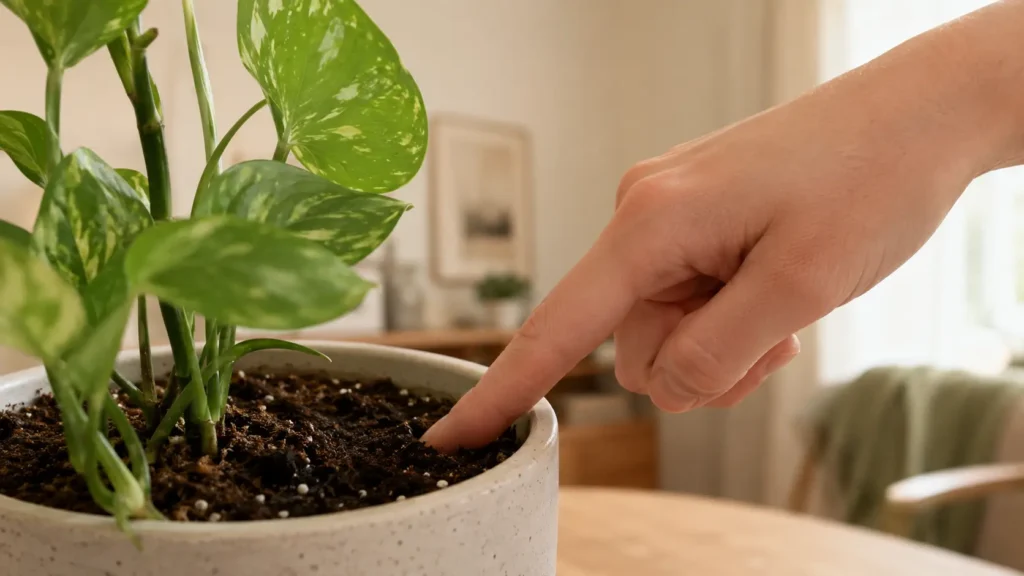
The finger test is one of the simplest ways to decide whether many indoor plants need water.
How to Do the Finger Test
Push your finger into the soil about 1–2 inches deep.
Then check how it feels:
- Dry: the plant may need water.
- Slightly moist: wait and check again later.
- Wet or soggy: do not water.
The University of Maryland Extension recommends testing soil moisture with your finger to about two inches deep for many houseplants, while noting that succulents and cacti are exceptions because they need much less water. (University of Maryland Extension)
When the Finger Test Works Best
The finger test works well for many beginner-friendly plants, including:
- Pothos
- Philodendron
- Spider plant
- Peace lily
- Chinese evergreen
- Monstera
- Rubber plant
When to Be More Careful
For plants like snake plant, ZZ plant, cacti, and succulents, do not water just because the top inch is dry. These plants usually prefer to dry out more thoroughly.
For moisture-loving plants like ferns, the soil may need to stay more evenly moist, but not soggy.
Other Ways to Check Before Watering
The finger test is helpful, but it is even better when combined with a few other checks.
Lift the Pot
A dry pot usually feels lighter. A wet pot feels heavier.
Over time, you will learn the difference between your plant’s “just watered” weight and “ready for water” weight.
Look at the Soil Color
Dry soil often looks lighter. Wet soil often looks darker.
This is not perfect, but it gives you another clue.
Check the Drainage
If your pot has no drainage hole, be extra careful. Water can collect at the bottom even if the top looks dry.
For beginners, the easiest setup is:
Nursery pot with drainage + decorative outer pot.
Water the plant in the nursery pot, let it drain, then place it back into the decorative pot.
Check the Light
If the plant is in low light, water less often. If it is near a bright window, it may dry faster.
Signs You Are Overwatering Indoor Plants
Overwatering is one of the most common reasons houseplants fail. Iowa State University Extension explains that roots sitting in wet soil for long periods can develop root rot, and that wilting from damaged roots can make beginners add even more water, making the problem worse. (Yard and Garden)
Common Signs of Overwatering
- Yellow leaves
- Drooping even when soil is wet
- Soft or mushy stems
- Leaf drop
- Fungus gnats
- Musty or sour soil smell
- Soil that stays wet for many days
- Brown or black mushy roots
The tricky part is that an overwatered plant can look thirsty.
That is why you should always check the soil before watering a drooping plant.
What to Do If You Think You Overwatered
- Stop watering temporarily.
- Check if the pot has drainage.
- Empty any water sitting in the saucer or decorative pot.
- Move the plant to brighter indirect light if appropriate.
- Let the soil dry before watering again.
- If the plant keeps declining, check the roots.
Do not immediately fertilize a stressed plant. Fertilizer does not fix root stress from soggy soil.
Signs You Are Underwatering Indoor Plants
Underwatering happens when the plant does not receive enough water for its needs.
Common Signs of Underwatering
- Dry, crispy leaf edges
- Curling leaves
- Drooping with very dry soil
- Soil pulling away from the edge of the pot
- Lightweight pot
- Slow decline
- Leaves feeling thin or limp
Underwatering is usually easier to fix than overwatering if the plant is not too far gone.
What to Do If You Underwatered
Water slowly and evenly until water drains from the bottom of the pot. Let the plant absorb moisture, then empty extra water from the saucer.
If the soil has become extremely dry and water runs straight through, you may need to water slowly in rounds or bottom-water the plant for a short period.
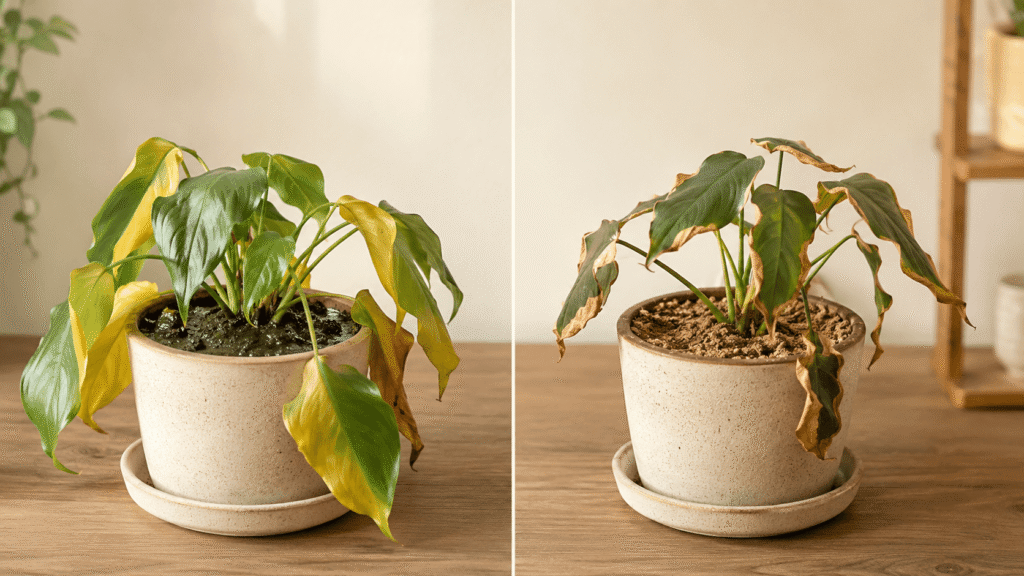
Overwatering vs Underwatering: Quick Comparison
| Symptom | More Likely Overwatering | More Likely Underwatering |
|---|---|---|
| Soil feel | Wet, soggy, heavy | Dry, dusty, pulling away |
| Leaves | Yellow, soft, drooping | Crispy, curled, limp |
| Pot weight | Heavy | Light |
| Smell | Musty or sour | Usually no smell |
| Pests | Fungus gnats may appear | Less common |
| First action | Wait and improve drainage | Water thoroughly |
The key is not to guess from the leaves alone. Always check the soil and pot first.
Should You Use a Moisture Meter?
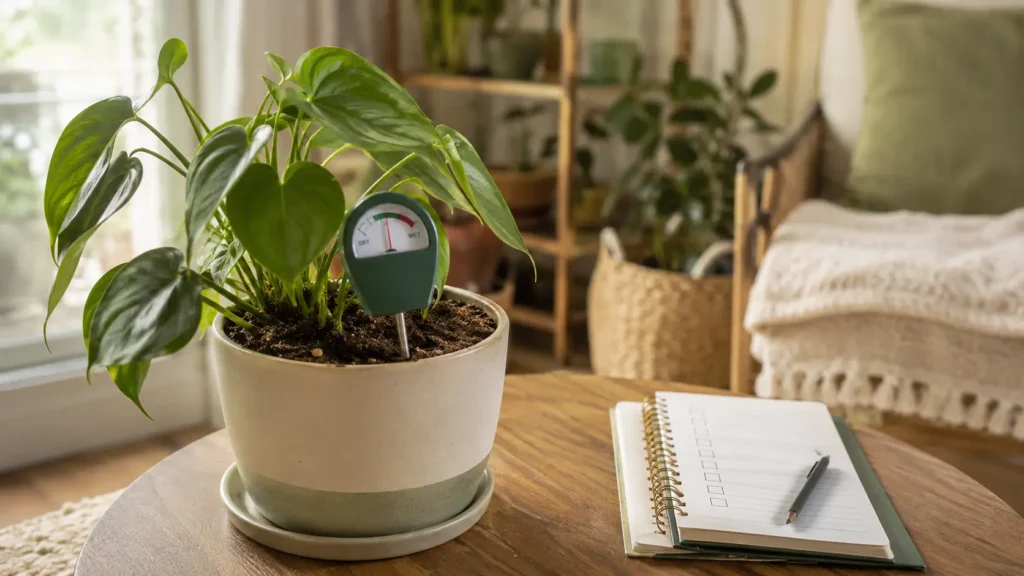
A moisture meter can be helpful for nervous beginners, especially if you often overwater.
It can help you check moisture deeper in the pot, where your finger may not reach. This is useful for larger pots, deep planters, and beginners who are still learning what dry soil feels like.
But a moisture meter is not magic.
Use it with:
- Finger test
- Pot weight
- Drainage check
- Light condition
- Plant type
A moisture meter can give you another clue, but it should not replace observation.
A simple moisture meter can be useful if:
- You keep overwatering plants
- You have large pots
- You are unsure whether soil is dry deeper down
- You are caring for low-light plants that dry slowly
You do not need an expensive one when starting. Choose a basic indoor plant moisture meter and learn how your plants respond.
Best Watering Can for Indoor Plants
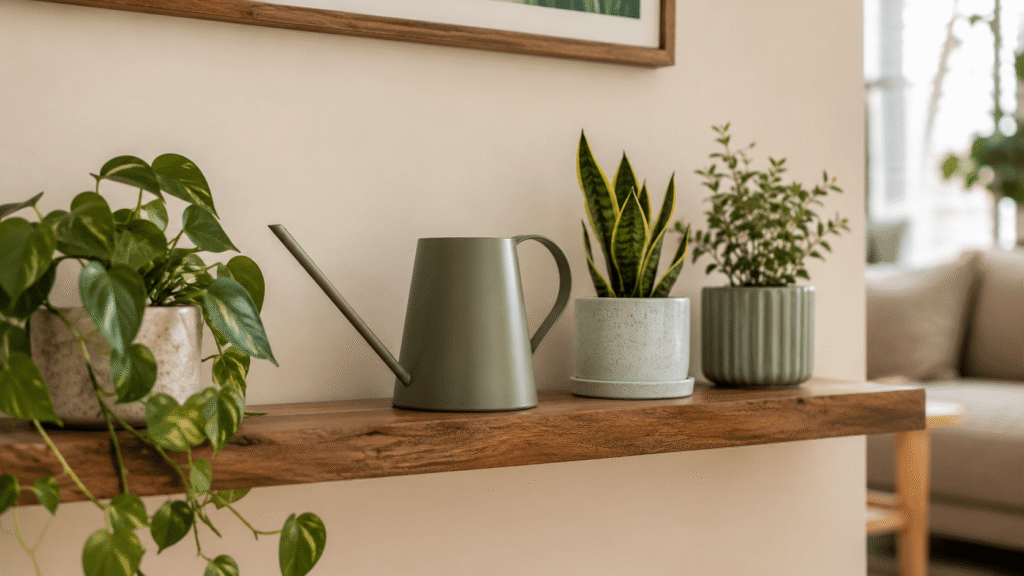
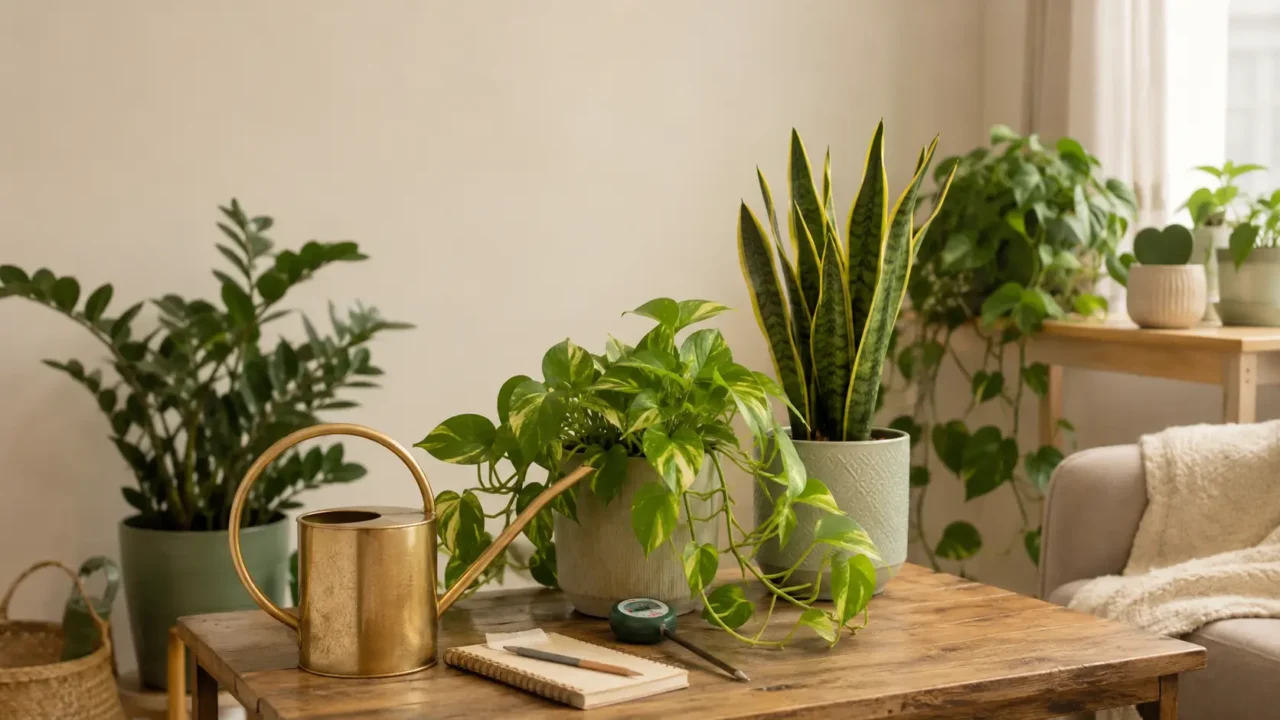
A small watering can with a narrow spout is one of the most useful beginner plant tools.
It helps you water the soil directly instead of splashing leaves, furniture, or the floor. It is especially helpful for shelf plants, small pots, desk plants, and plants placed inside decorative cover pots.
What to Look For
Choose a watering can that is:
- Small enough for indoor use
- Easy to control
- Comfortable to hold
- Designed with a narrow spout
- Not too heavy when full
Avoid huge outdoor watering cans for small apartment plants. They are harder to control indoors.
Use a Plant Watering Tracker
A plant watering tracker helps you stop guessing.
You can use a notebook, printable tracker, spreadsheet, phone note, or the NeatNookLiving plant care tracker.
Track:
- Plant name
- Location
- Date checked
- Soil condition
- Date watered
- Light level
- Any yellow leaves, drooping, pests, or changes
This helps you notice patterns.
For example:
- Your snake plant may only need water every 3–4 weeks in winter.
- Your pothos may dry faster near a bright window.
- Your ZZ plant may stay wet too long in a decorative pot.
- Your fern may need checking more often than your snake plant.
Tracking turns plant care from guessing into learning.
Download the Free Apartment Plant Quick-Start Guide
Simple Beginner Watering Routine
Here is an easy weekly routine for most beginner plant owners.
Step 1: Pick One Plant Check Day
Choose one day each week to check your plants.
Example: Saturday morning or Sunday afternoon.
Step 2: Check Soil Before Watering
Use the finger test, pot weight, and visual soil check.
Step 3: Water Only the Plants That Need It
Do not water every plant automatically.
Step 4: Water Thoroughly
When a plant truly needs water, water until excess drains out of the bottom.
Step 5: Empty the Saucer
Do not let the plant sit in standing water.
Step 6: Track What You Did
Write down which plants you watered and which ones you skipped.
This simple routine works better than a strict watering schedule.
Beginner Watering Examples
Snake Plant
Check weekly. Water only when the soil is very dry. In low light or winter, it may go several weeks without water.
ZZ Plant
Check weekly or every 10 days. Water only when the soil has dried well. Avoid frequent watering.
Pothos
Check weekly. Water when the top part of the soil feels dry. It may need water more often in bright light.
Peace Lily
Check weekly or more often in warm bright rooms. Peace lilies may droop when dry, but still check the soil before watering.
Spider Plant
Check weekly. Water when the top layer of soil feels dry, but avoid keeping it soggy.
Common Beginner Watering Mistakes
Mistake 1: Watering Every Plant the Same Way
Different plants have different water needs.
Mistake 2: Watering Because Leaves Droop
Drooping can happen from underwatering or overwatering. Check the soil first.
Mistake 3: Using a Pot With No Drainage
Without drainage, water can collect around the roots.
Mistake 4: Adding “Just a Little Water” Too Often
Tiny frequent sips can keep the top soil damp while the root ball dries unevenly, or they can create constant moisture near the surface.
Mistake 5: Not Adjusting for Winter
Many plants need less water when light is lower and growth slows.
Download the Free Apartment Plant Quick-Start Guide
Want a simple watering checklist and beginner plant care routine?
Download the free Apartment Plant Quick-Start Guide here:
Apartment Plant Quick-Start Guide
It is made for apartment plant beginners, low-light homes, renters, and people who want indoor plant care to feel simple instead of stressful.
For a deeper system with checklists, trackers, plant shopping help, and troubleshooting guides, you can also explore:
Conclusion
So, how often to water indoor plants?
The best answer is: check your plants weekly, but only water when the soil, plant type, pot, and light conditions show that water is needed.
A fixed watering schedule can cause problems because every plant and home is different. Instead, use a simple plant check routine: test the soil, lift the pot, check drainage, observe the leaves, and track your watering.
Once you stop watering by habit and start watering by observation, indoor plant care becomes much easier.
FAQ
How often should I water indoor plants?
Most indoor plants should be checked weekly, but not automatically watered weekly. Water when the soil has dried enough for that specific plant type.
Is once a week enough for indoor plants?
Sometimes, but not always. Some plants need water more often, while snake plants, ZZ plants, cacti, and succulents may need water much less often.
What is the easiest way to know when to water indoor plants?
Use the finger test. Push your finger about 1–2 inches into the soil. If it feels dry, many common houseplants may need water. If it feels moist or wet, wait.
Should I water indoor plants from the top or bottom?
Top watering works well for most plants if the pot has drainage. Bottom watering can help when soil is very dry and pulling away from the pot, but do not leave the plant sitting in water too long.
Are moisture meters worth it for indoor plants?
A moisture meter can help beginners, especially with large pots or low-light plants. But it should be used with the finger test, pot weight, drainage checks, and plant observation.
New to apartment plants?
Download the free Apartment Plant Quick-Start Guide — five forgiving low-light plants, the one watering rule, and a 10-minute weekly routine.
Download the Free Guide