Why Are My Indoor Plant Leaves Turning Yellow?
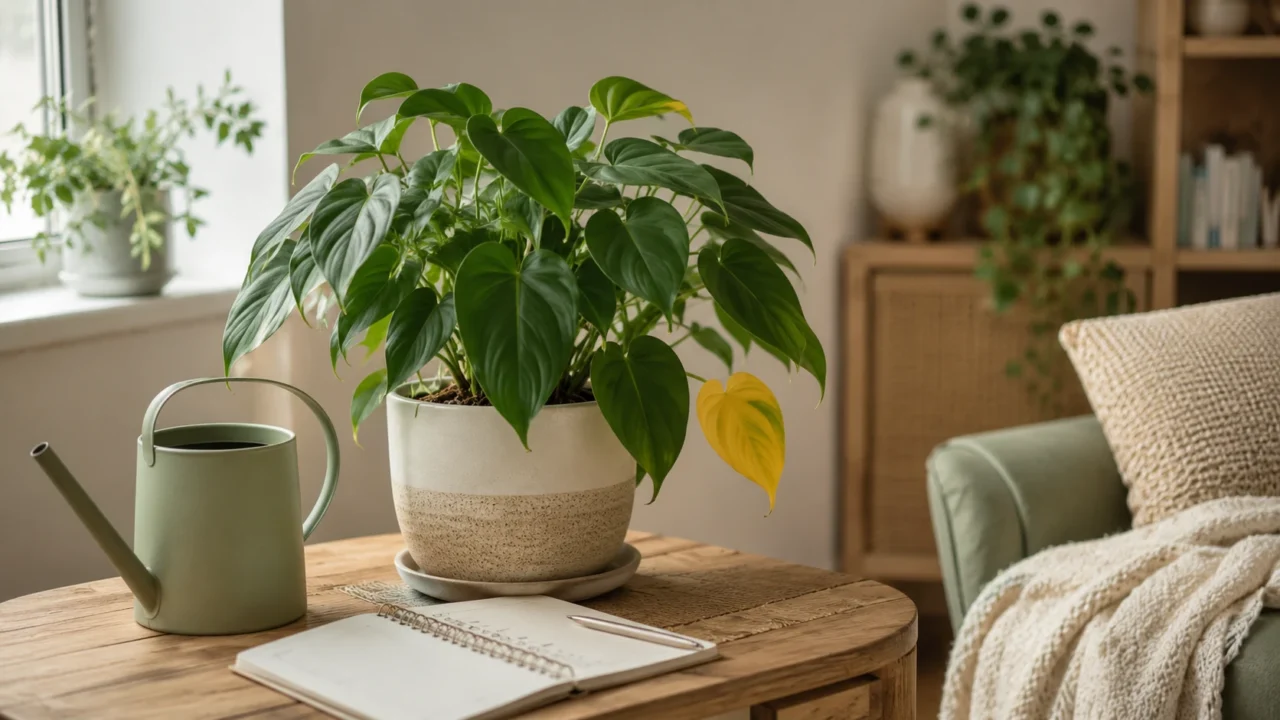
If you are seeing yellow leaves on indoor plants, it is easy to panic and think your plant is dying.
But a yellow leaf is not always an emergency. Sometimes it is an old leaf naturally aging. Other times, it is your plant’s way of telling you something is off with watering, light, drainage, soil, pests, or recent care changes.
The mistake many beginners make is reacting too quickly.
They see a yellow leaf and immediately water more, repot the plant, add fertilizer, move it to a new room, or cut off half the plant. That can create more stress.
A better approach is simple:
Do not guess. Decode the yellow leaf first.
In this guide, you will learn the most common causes of yellow leaves, how to check the soil, how light and drainage affect leaf color, what to do next, and how to use a simple tracker so the same problem does not keep repeating.
Yellow Leaves on Indoor Plants: What They Usually Mean
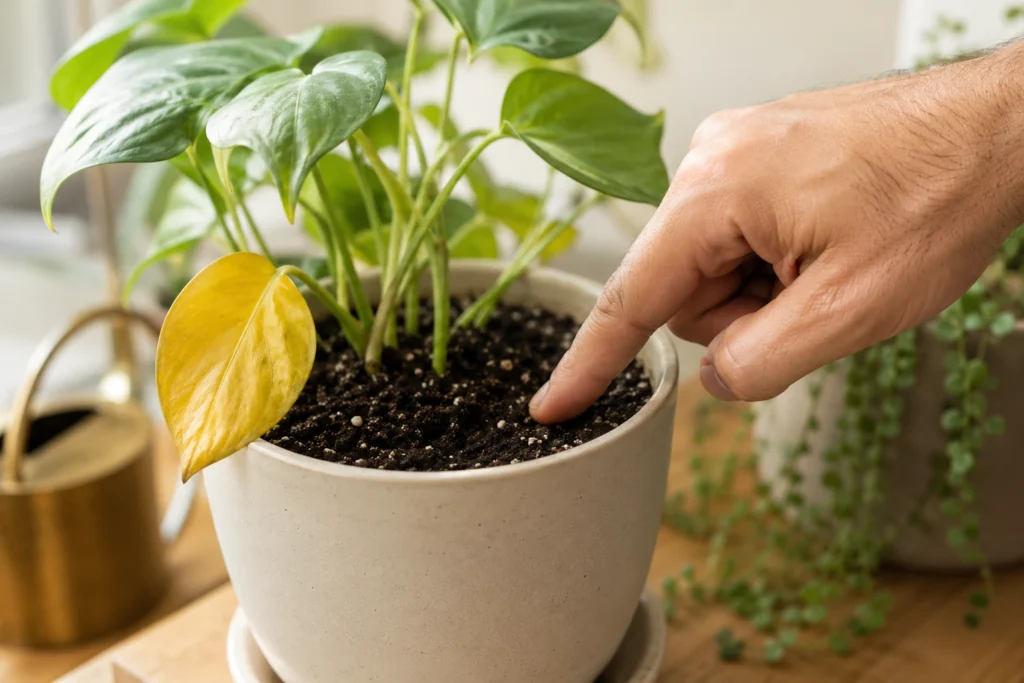
Yellow leaves can happen for many reasons. The most common beginner causes are:
- Too much water
- Too little water
- Poor drainage
- Not enough usable light
- Natural old leaf aging
- Sudden changes in placement
- Pest pressure
- Root stress
- Fertilizer or mineral buildup
- Seasonal changes
The University of Maryland Extension explains that when plants are too wet, they may drop leaves or turn yellow, and that plants should not be watered only by schedule. They should be watered when they need it. (University of Maryland Extension)
That is important because yellow leaves are often connected to watering mistakes — especially overwatering.
But yellow does not always mean “add more water.”
Sometimes the plant is already too wet.
First: Is One Yellow Leaf Normal?
Before you diagnose a serious problem, look at the pattern.
One Older Yellow Leaf
If one older lower leaf turns yellow while the rest of the plant looks healthy, it may simply be natural leaf aging.
Plants replace old leaves over time. This is especially common after a plant adjusts to a new home, a new light level, or seasonal changes.
Many Yellow Leaves
If several leaves are turning yellow at once, or the yellowing is spreading, something is probably wrong.
Look closely at:
- Soil moisture
- Pot drainage
- Light level
- Leaf texture
- Stem condition
- Pests
- Recent changes
Yellow Leaves Plus Wet Soil
This often points toward overwatering, poor drainage, or root stress.
Yellow Leaves Plus Dry Soil
This may point toward underwatering, inconsistent watering, or soil that has become too dry to absorb water evenly.
Common Causes of Yellow Leaves on Indoor Plants
1. Overwatering
Overwatering is one of the most common reasons indoor plant leaves turn yellow.
It happens when soil stays wet for too long. Roots need both moisture and oxygen. When the soil stays constantly wet, roots can become stressed and may begin to rot.
Iowa State University Extension explains that overwatering is a common reason houseplants fail, and symptoms can include yellowing or browning leaves, leaf drop, wilting, crown rot, fungus gnats, and even plant death. (Yard and Garden)
Signs of Overwatering
- Yellow leaves
- Wet or soggy soil
- Drooping even when soil is wet
- Soft stems
- Leaf drop
- Fungus gnats
- Musty or sour soil smell
- Soil that stays wet for many days
What to Do
Stop watering temporarily. Check that the pot has drainage. Empty any water sitting in the saucer or decorative pot. Move the plant to brighter indirect light if appropriate. Wait until the soil dries enough before watering again.
If the plant keeps declining, gently check the roots. Healthy roots are usually firm and light-colored. Rotten roots may look dark, soft, or mushy.
2. Poor Drainage
Sometimes the problem is not how much water you add. The problem is where the water goes afterward.
If a pot has no drainage hole, water can collect at the bottom. The top of the soil may look fine while the lower roots sit in wet soil.
The University of Minnesota Extension notes that pots should drain well and warns that overwatering and poor drainage can cause root rot and encourage fungus gnats. (University of Minnesota Extension)
Signs Drainage May Be the Problem
- Pot has no drainage hole
- Water sits in the decorative pot
- Soil stays wet for a long time
- Yellow leaves appear mostly near the lower part of the plant
- Fungus gnats appear
- The plant droops even when soil is moist
What to Do
Use the beginner-friendly method:
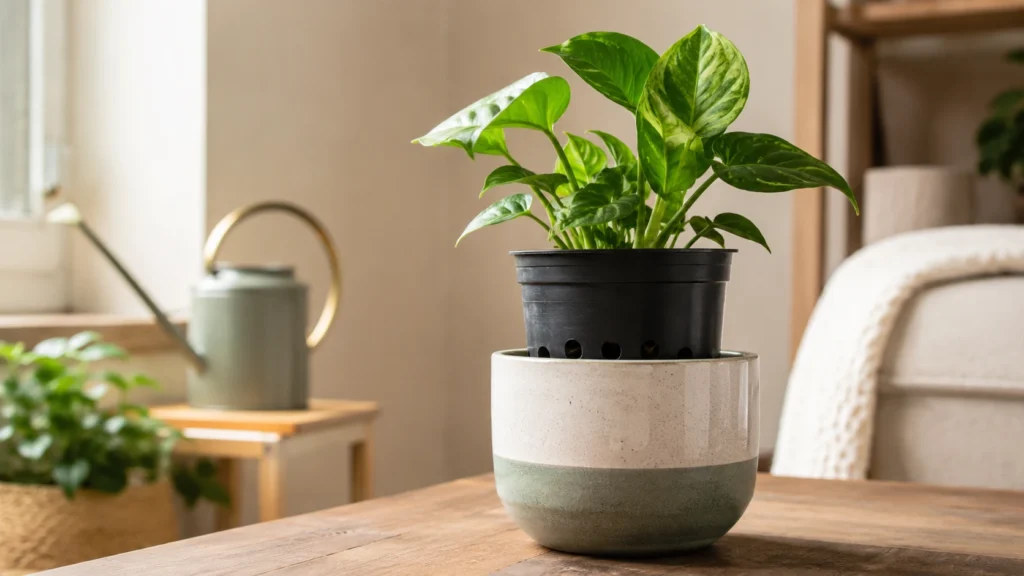
Nursery pot with drainage + decorative outer pot.
Keep the plant in a plastic nursery pot with drainage holes. Place that inside a prettier decorative pot. When watering, remove the nursery pot, water thoroughly, let it drain, then place it back.
This keeps the plant healthy while still looking good in your apartment.
Helpful tool: Drainage pots and saucers can make watering much easier for beginners.
3. Not Enough Light
Low light can also cause yellowing.
When a plant does not receive enough usable light, it may lose green color, grow slowly, become leggy, drop leaves, or yellow over time. University of Minnesota Extension explains that plants lacking light may not produce enough chlorophyll, and leaves can turn pale green, yellow, or white. (University of Minnesota Extension)
This is especially common in apartments because a room can look bright to human eyes while still being too dim for healthy plant growth.
Signs Your Plant May Need More Light
- Yellowing leaves
- Pale or faded leaves
- Long, thin, stretched growth
- Leaves dropping
- Soil staying wet longer than usual
- Plant leaning toward a window
What to Do
Move the plant closer to a window with indirect light. Avoid harsh direct sun unless the plant type can handle it. Rotate the pot weekly so growth stays balanced.
If your room has very little daylight, consider a small LED grow light.
For more help, read: 5 Beginner-Friendly Low-Light Plants for Apartments
4. Underwatering
Yellow leaves can also happen when a plant gets too dry, especially if watering has been inconsistent.
Underwatered plants often show dryness in the leaves and soil. The soil may pull away from the sides of the pot, and the pot may feel very light.
Signs of Underwatering
- Dry, crispy leaf edges
- Curling leaves
- Drooping with dry soil
- Soil pulling away from the pot edge
- Very lightweight pot
- Leaves feeling thin or limp
- Yellowing after repeated dry stress
What to Do
Water slowly and evenly until water drains from the bottom. Let excess water drain fully. If the soil is extremely dry and water runs straight through, water slowly in rounds or bottom-water briefly, then let the plant drain.
Do not leave the pot sitting in water for a long time.
For a complete watering guide, read: How Often Should You Water Indoor Plants?
5. Sudden Changes
Indoor plants can yellow after a sudden change.
This may happen after:
- Bringing a plant home from the shop
- Moving it to a new room
- Repotting
- Changing light exposure
- A cold draft
- Heat from a radiator or vent
- A big change in watering routine
Some yellowing after a move can be adjustment stress. But if the yellowing continues, check water, drainage, and light.
What to Do
Do not keep moving the plant every day. Choose one suitable spot, give it stable care, and observe. Make one change at a time so you can understand what actually helped.
6. Pest Problems
Pests can weaken indoor plants and cause yellowing, speckling, distorted leaves, sticky residue, or leaf drop.
Common indoor plant pests include:
- Spider mites
- Aphids
- Mealybugs
- Scale
- Fungus gnats
University of Maryland Extension recommends checking leaves, including undersides and leaf axils, for insects or disease when selecting indoor plants. It also warns against buying plants with yellow leaves, brown leaf margins, wilting, or spindly growth. (University of Maryland Extension)
What to Do
Inspect leaves closely, especially the undersides. Isolate the plant if you see pests. Remove heavily damaged leaves. Use a gentle appropriate houseplant pest method based on the pest type.
If you are unsure, take a clear photo of the leaf tops, undersides, stems, and soil before treating.
Yellow Leaf Decoder
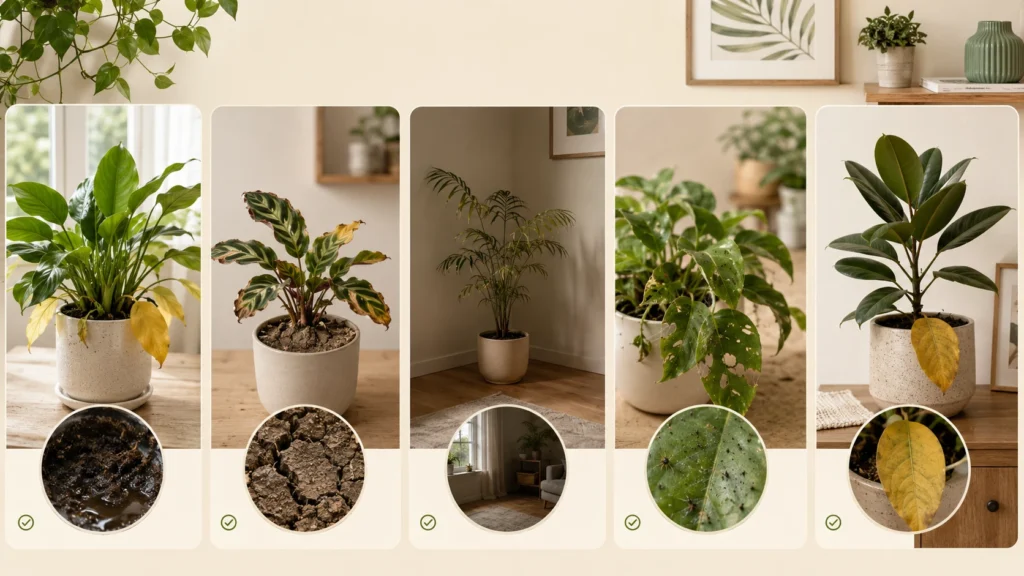
Use this quick decoder before reacting.
| What You See | What It May Mean | What to Check First |
|---|---|---|
| One older lower leaf is yellow | Natural aging | Overall plant health |
| Many yellow leaves + wet soil | Overwatering or poor drainage | Soil, drainage, saucer |
| Yellow leaves + drooping + wet soil | Root stress | Roots, pot drainage |
| Yellow leaves + dry crispy edges | Underwatering or dry air | Soil dryness, watering pattern |
| Pale yellow leaves + stretched stems | Not enough light | Window distance, light level |
| Yellow leaves after moving plant | Adjustment stress | Recent changes |
| Yellow leaves + tiny flies | Damp soil/fungus gnats | Watering and drainage |
| Yellow leaves + webbing or speckles | Possible pests | Leaf undersides |
The goal is not to diagnose from one leaf alone. Look at the full pattern.
Yellow Leaf Checklist
Before watering, repotting, or fertilizing, go through this checklist.
Step 1: Check the Soil
Push your finger 1–2 inches into the soil.
- Dry? The plant may need water.
- Slightly moist? Wait.
- Wet or soggy? Do not water.
Step 2: Check the Pot
Ask:
- Does the pot have a drainage hole?
- Is water sitting in the saucer?
- Is the plant inside a decorative pot with trapped water?
- Is the pot much too large for the plant?
Step 3: Check the Light
Ask:
- Is the plant close enough to a window?
- Is it in a dark corner?
- Is it getting harsh direct sun?
- Has the season changed?
Step 4: Check the Leaf Pattern
Ask:
- Is it one old leaf?
- Are many leaves yellowing?
- Are leaves soft, crispy, pale, or spotted?
- Are lower leaves affected first?
Step 5: Check for Pests
Look under leaves and around stems.
Check for:
- Webbing
- Sticky residue
- White cottony spots
- Tiny moving insects
- Small flies around soil
Step 6: Check Recent Changes
Ask:
- Did you move the plant?
- Did you repot it?
- Did you fertilize recently?
- Did your watering routine change?
- Did the room become colder, darker, or drier?
Step 7: Change One Thing
Do not water, repot, fertilize, prune, and move the plant all in one day.
Change one thing. Then observe.
What to Do When You Find Yellow Leaves
If the Soil Is Wet
Wait before watering again. Improve drainage. Empty standing water. Move the plant to brighter indirect light if the plant type allows it.
If the Soil Is Dry
Water thoroughly until water drains out. Let the pot drain fully. Track how long it takes to dry again.
If the Pot Has No Drainage
Move the plant into a nursery pot with drainage or use a proper drainage pot. This is one of the best beginner fixes.
If the Plant Is in a Dark Corner
Move it closer to indirect light. Low-light plants still need usable light.
If Only One Old Leaf Is Yellow
You can remove the yellow leaf once it is mostly yellow or fully spent. If the rest of the plant looks healthy, continue normal care.
If Many Leaves Are Yellowing
Pause and diagnose. Do not fertilize first. Check soil, roots, drainage, light, and pests.
Should You Cut Off Yellow Leaves?
Usually, yes — once the leaf is mostly yellow.
A yellow leaf will not turn green again. Removing it can make the plant look cleaner and help you monitor whether new yellowing appears.
Use clean scissors or pruners. Cut close to the base of the leaf stem without damaging healthy growth.
Do not remove too many leaves at once unless they are clearly dead or diseased. If the plant is already stressed, heavy pruning can add more stress.
Helpful Tools for Yellow Leaf Problems
You do not need a huge plant-care setup. But a few simple tools can help you prevent repeat problems.
1. Drainage Pots
Drainage pots help excess water escape instead of sitting around the roots.
Best for:
- Beginners
- Low-light plants
- People who overwater
- Apartments with decorative pots
Recommended page: Beginner plant tools, sorted by what to buy first
2. Saucers or Drip Trays
Saucers protect furniture and floors, but they should not hold standing water for long. Empty them after watering.
3. Moisture Meter
A basic moisture meter can help if you keep guessing wrong, especially with larger pots. Use it as one clue, not the only clue.
4. Plant Care Tracker
A tracker helps you notice patterns.
Track:
- Date checked
- Date watered
- Soil condition
- Light changes
- Yellow leaves
- Pest signs
- Repotting
- Fertilizer
This helps you see whether yellowing happened after watering, moving, repotting, or seasonal changes.
Recommended free resource: Download the Free Apartment Plant Quick-Start Guide
Common Beginner Mistakes to Avoid
Mistake 1: Watering Immediately
Yellow leaves do not automatically mean thirst. Check the soil first.
Mistake 2: Ignoring Drainage
If water cannot drain, roots can stay wet too long.
Mistake 3: Moving the Plant Repeatedly
Plants need time to adjust. Change one thing and observe.
Mistake 4: Fertilizing a Stressed Plant
Fertilizer does not fix overwatering, root rot, poor drainage, or low light.
Mistake 5: Treating One Yellow Leaf Like a Disaster
One old yellow leaf can be normal. Look for patterns.
Download the Free Yellow Leaf Checklist
Want a simple checklist you can use before watering or repotting?
Download the free Apartment Plant Quick-Start Guide here:
Download the Free Apartment Plant Quick-Start Guide
It includes beginner-friendly plant care guidance for apartments, low-light rooms, watering mistakes, and common plant problems.
For a deeper system with plant trackers, care routines, shopping lists, and troubleshooting tools, explore:
The Apartment Plant Starter System
Conclusion
Yellow leaves on indoor plants are not always a sign that your plant is dying.
They are a signal.
Sometimes the signal is simple: one old leaf is aging. Other times, your plant may be dealing with overwatering, poor drainage, low light, underwatering, pests, or recent stress.
The best beginner response is to slow down and check the basics:
Soil. Light. Drainage. Pattern. Pests. Recent changes.
Once you decode the yellow leaf instead of guessing, indoor plant care becomes much less stressful.
FAQ
Why are my indoor plant leaves turning yellow?
Indoor plant leaves can turn yellow because of overwatering, underwatering, poor drainage, low light, pests, natural aging, root stress, or sudden care changes.
Should I cut yellow leaves off indoor plants?
Yes, you can remove yellow leaves once they are mostly yellow. They usually will not turn green again. Use clean scissors and avoid removing too many leaves at once if the plant is stressed.
Do yellow leaves mean overwatering?
Often, but not always. Yellow leaves plus wet soil, fungus gnats, drooping, or musty soil often point to overwatering or poor drainage. Always check the soil first.
Can too little light cause yellow leaves?
Yes. Low light can cause pale or yellow leaves, stretched growth, slow growth, and leaf drop. Plants still need usable light, even if they are labeled low-light tolerant. (University of Minnesota Extension)
Can a yellow leaf turn green again?
Usually, no. Once a leaf has turned yellow, it generally will not return to green. Focus on fixing the cause and protecting new healthy growth.
New to apartment plants?
Download the free Apartment Plant Quick-Start Guide — five forgiving low-light plants, the one watering rule, and a 10-minute weekly routine.
Download the Free Guide